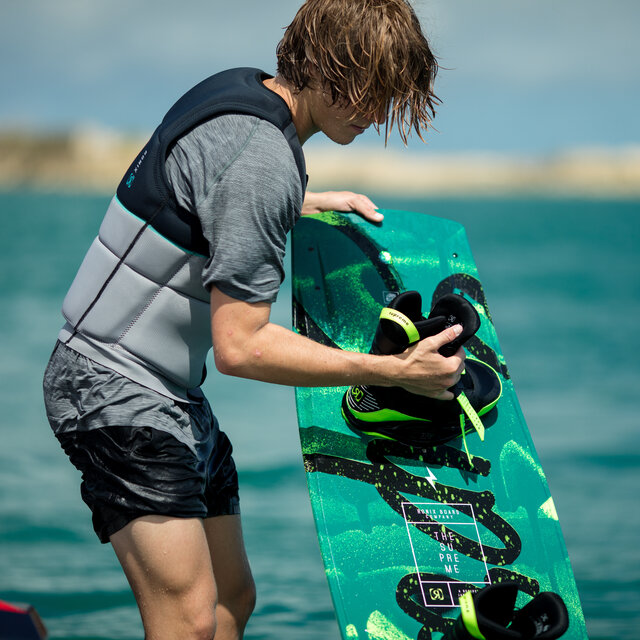
Welcome to Sun & Ski Sport’s Wakeboard Buying Guide. Not long ago, choosing the right wakeboard was much simpler. Today the options are plentiful and diverse. Wakeboarding manufacturers continue to push the boundaries on what can be done with wakeboard shapes, sizes, and materials. It is wonderful that we have so many shapes and styles to choose from, but the many options may leave you drowning in your decision. This guide will give you all the information you need to get out on the water with a board you will love.
Cable or Boat?
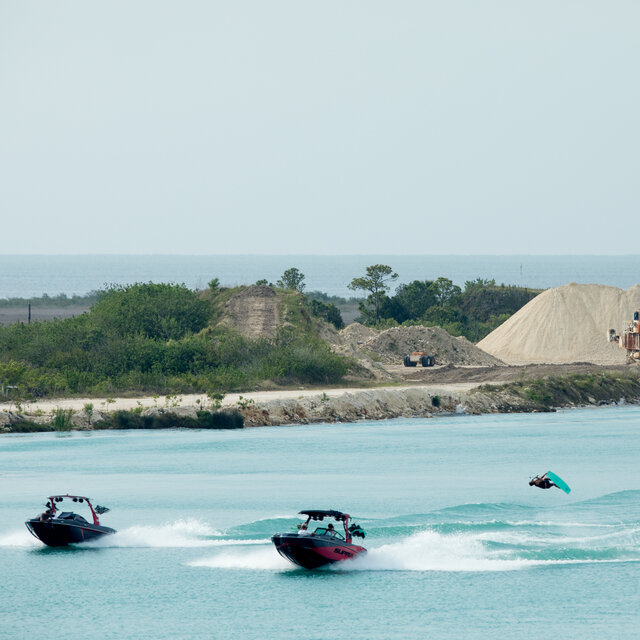
To start off our wakeboard buying guide, we need to determine whether we will be spending our time on the water being pulled by a boat or around a cable park. Although there are boards that can work well doing both, there are really two types of wakeboards, boat boards, and cable boards.
Boat Boards- Boat boards are typically made with a foam core and have stiff flex patterns allowing them to provide more pop off the wake. The base of these boards often has features that help you hold a strong edge as well as soften landings. These boards will either have molded-in fins, bolt-on fins, or both. These fins give a rider added edge hold and leverage as they cut in towards the wake.
Cable Boards- Cable boards, in contrast, are typically made with wood cores that allow for a softer flex pattern enabling them to perform better on the features/obstacles at a cable park. These boards are often flat or have relatively low profile channels on the base to allow for optimal stability and connection when riding obstacles. These boards are often designed without fins.
Rider Ability
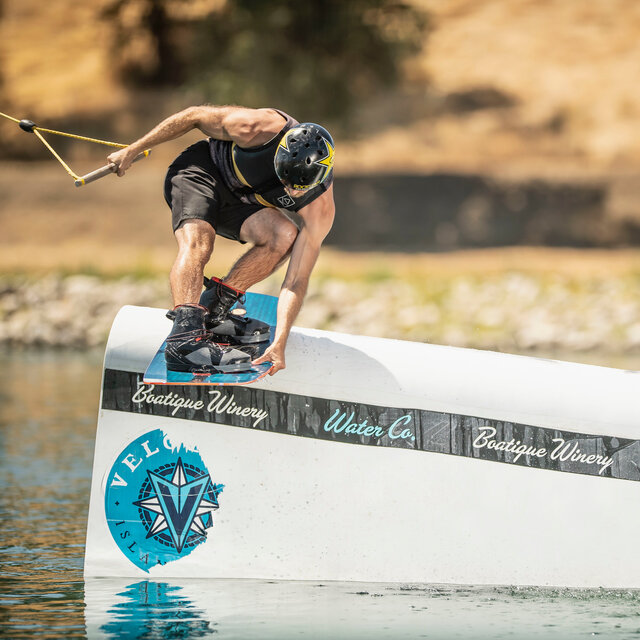
Another factor to consider in our wakeboard buying guide is your own ability. Buying a wakeboard that matches your riding ability will assist you in becoming a better rider faster.
Novice
A novice rider is entirely new to the sport, might still be learning how to get up on top of the water, and has trouble riding outside of the wake. Slower speeds will help this rider gain confidence and ability with friendlier falls.
Beginner
A beginner rider can consistently get up on top of the water and are able to cut in and out of the wake. Riders at this level can ollie, do some surface or ollie 180’s, and are starting to make progress in clearing the wake on their heelside and toeside edges. A smaller, softer wake can help this rider build confidence and ability.
Intermediate
An intermediate rider has mastered their heelside and toeside wake jumps and is beginning to add style (grabs) and amplitude to their riding. Intermediate wakeboarders can do some wake to wake 180’s, 360’s, and base inverts like backrolls and tantrums. These riders like a good-sized wake (but not too big)
Advanced
An advanced-level rider can throw most base inverts and spins up to 720s. They can grab most tricks giving their riding added style and difficulty. These riders like the biggest wake possible and prefer a fast board with a lot of pop.
Board Shape
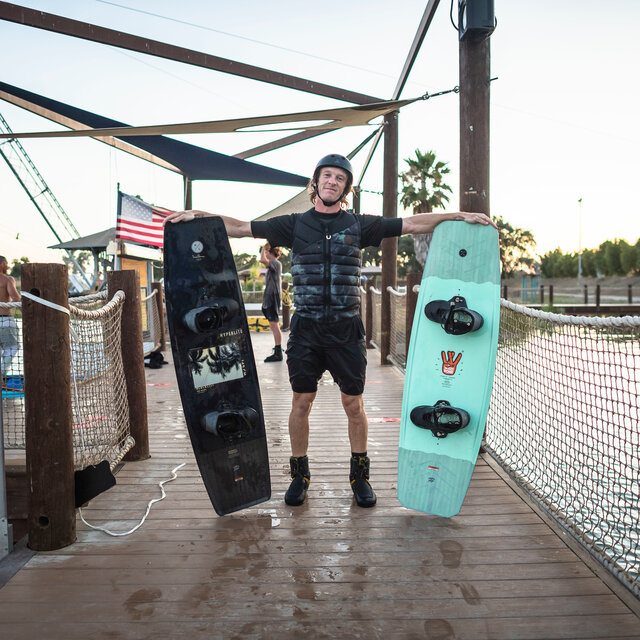
Now we get to the fun stuff in our wakeboard buying guide. While most wakeboards are twin in shape (meaning they ride the same regardless of direction), there are other shapes available. As the sport continues to progress, we are beginning to see asymmetrical boards and even a resurrection of the directional board shape.
- Twin – all sides of the board are symmetrical, and this type of board will feel the same riding regular or switch.
- Asymmetrical – these boards have a shorter toeside edge than their heel side edge. When cutting into or away from the wake on their toeside edge, the body is in a twisted position. To master this edging technique, the rider needs to resist the untwist to maintain a powerful edge all the way through the wake. The shorter toeside edge on an asymmetrical board gives the rider more leverage over their toes, which assists riders in holding this harder to master edge.
- Directional– A throwback to the early days where all wakeboards were directional, this shape typically has a shorter tail and longer nose with more rocker upfront and much less towards the tail of the board. These boards are great for carving around and having fun.
Rocker Profile
The next step in our wakeboard buying guide is the rocker profile. The four types of rocker profiles you will find are a continuous rocker, three-stage rocker, hybrid, and camber rocker. These shapes define the way your board cuts through the water and how it releases off the wake.
Continuous Rocker
This rocker is a bend in the shape of the board from tip to tail without interruption. This type of rocker provides consistent pop off of the wake and softer landings. This rocker cuts through the water with ease giving the board a fast and consistent ride. This is good for:
- Riders who want a consistent feel
- Smooth landings and fast carving in an out of the wake
Three-Stage Rocker
Another profile to consider is the three-stage rocker. This a board profile that is flat in the middle and rockers up on the tip and tail of the board. This shape provides more pop off of the wake due to the abrupt transition from rocker to flat. The flat bottom does not dampen landings as much as a continuous rocker-shaped board would. Three-stage boards tend to feel a little slower as they carve through the water and are less consistent in their release off the wake. Overall, it is good for:
- Riders who want to go big
- Having more time to grab your board or add a rotation to a spin
Hybrid Rocker
A hybrid rocker profile is a combination of continuous rocker and three-stage rockers. There are different variations of this rocker type, but they all strive to provide the consistency and softer landings of a continuous rocker board with the aggressive pop of a three-stage rocker. You want this profile for:
- Riders who want it all
- Consistent and high flying pop combined with smooth landings
Camber Rocker
The final profile to consider is a camber profile. This rocker is inspired by snowboard designs. Camber is a bow or arc in the profile of the wakeboard. This arc pushes the tip and tail of the board down, providing more consistent weight distribution on each as you ride through the wake. This balanced push through the wake can produce more pop but can take some time to dial in the consistency. A camber profile is best for:
- Riders who want to get booted
- A more centered weight distribution as you ride through the wake
Board Size
Although the size of your board will vary depending on your riding ability, style, and preferences, there are some general sizing guidelines you can go by.
- Beginners should wait to size down until they have a better feel for their wakeboard.
- A bigger board, to begin with, will provide more buoyancy and surface area to aid in getting up but too big a board will make control an issue
- Shorter boards have less swing weight and are easier to control
- Longer boards have a larger surface area that will provide more pop off the wake and softer landings but will be more difficult to control
Wakeboard Edges
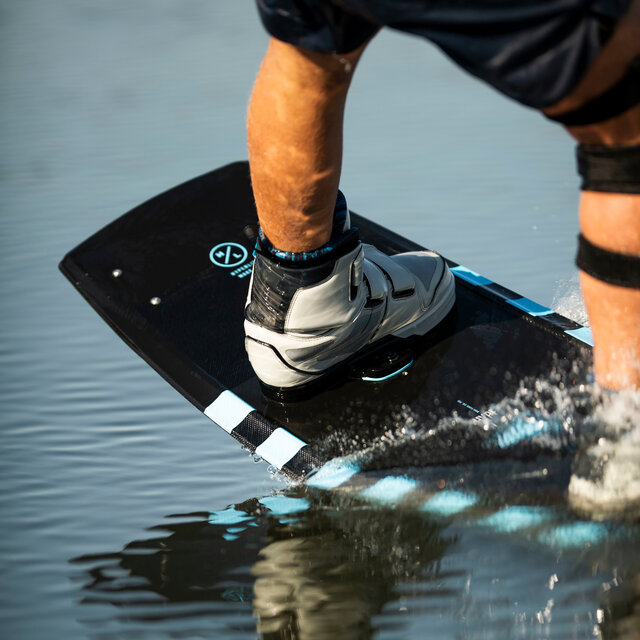
The design of the wakeboard’s edges plays an important role in the way the board moves through the water. The profile of a wakeboard is thicker in the middle and is thinner in the tip and tail. This profile can have a sharper or more variable edge design. A sharper edge will aid in the boards’ ability to aggressively cut through the water and hold a strong edge. This type of edge gives the board a fast feel but is less forgiving. A variable edge has a more rolled shape in the middle as it tapers to a sharper edge on the tip and tail. This variable design gives the tracking you need when the board is on edge, but the forgiveness you may want when the board is flat.
Fins
Fins help your board track through the water. They help you tell the board which direction to go as well as aid in holding a nice hard edge. There are two styles of fins, in-molded and removable. In-molded fins will have a tapered connection to the board and good tracking. Removable fins can be changed out with different sizes and configurations on the board. A beginner would benefit from having a nice center fin, which assists in controlling the direction of the board while a more experienced rider will want a loser more forgiving feel by not having a center fin.
Quick Beginners Guide
In this wakeboard buying guide, we’ll also go over a quick beginner’s guide. If you want a more in-depth look at these topics, start from the beginning.
Before learning about all the shapes and sizes of boards, it is best to understand your riding ability. Buying a wakeboard that matches your riding ability will assist you in becoming a better rider faster.
Novice- A novice rider is entirely new to the sport, might still be learning how to get up on top of the water, and has trouble riding outside of the wake. Slower speeds will help this rider gain confidence and ability with friendlier falls.
Beginner– A beginner rider can consistently get up on top of the water and are able to cut in and out of the wake. Riders at this level can ollie, do some surface or ollie 180’s, and are starting to make progress in clearing the wake on their heelside and toeside edges. A smaller, softer wake can help this rider build confidence and ability.
Board Shapes
While most boards are twin-shaped and will be well suited for a beginner, an asymmetrically shaped board would be even better. As a beginner rider, one of the hardest techniques to master is the toe side edge. When cutting on the toe side edge, the body is in a twisted position. To master this edge, the rider needs to resist the untwist to maintain a powerful edge all the way through the wake. The shorter toe side edge on an asymmetrical board gives the rider more leverage over their toes, which assists riders in holding this harder to master edge.
- Asymmetrical boards assist in a rider’s control of their toe side edge and speed the riders learning progression
Board Sizes
A rider’s weight is one of the most significant factors when determining the correct size for their board. Later on, as riders progress, their own individual style and preferences will influence their board size as well. For beginners, it is best to use this sizing guide and to size to the upper end according to your weight. For example, if a rider weighs 160 lbs according to this chart, they could ride a board anywhere from 134cm – 146cm.
A beginner rider would benefit from riding closer to the upper end of this size range (140-146cm). The added surface area and buoyancy of the larger board will make learning to get up out of the water easier.
Rocker Profile
The four types of rocker profiles are a continuous rocker, three-stage rocker, hybrid, and camber rocker. These shapes define the way that your board cuts through the water and how it releases off the wake. For the beginner rider, the continuous and hybrid rockers will be the most consistent and forgiving to aid in the learning process. Beginners should avoid camber rockers.
Continuous Rocker
A continuous rocker is a bend in the shape of the board from tip to tail without interruption. This type of rocker provides consistent pop off of the wake and softer landings. This rocker cuts through the water with ease giving the board a fast and consistent ride.
Hybrid Rocker
A hybrid rocker is a combination of continuous rocker and three-stage rockers. There are different variations of this rocker type, but they all strive to provide the consistency and softer landings of a continuous rocker board with the aggressive pop of a three-stage rocker.
Wakeboard Edges
The design of the wakeboard’s edges plays an important role in the way the board moves through the water. The profile of a wakeboard is thicker in the middle and is thinner in the tip and tail. This profile can have a sharper or more variable edge design. A sharper edge will aid in the boards’ ability to aggressively cut through the water and hold a strong edge. This type of edge gives the board a fast feel but is less forgiving. A variable edge has a softer, more rolled shape in the middle as it tapers to a sharper edge on the tip and tail. This variable design gives the tracking you need when the board is on edge, but the forgiveness a beginner will want when the board is flat.
Fins
Fins help your board track through the water. They help you tell the board which direction to go as well as aid in holding a nice hard edge. A beginner would benefit from having a nice center fin, which assists in controlling the direction of the board while a more experienced rider will want a loser more forgiving feel by not having a center fin.
That about does it for the wakeboard buying guide. There’s a lot of info out there and we hope this guide has helped clear some of it out. For the best info on wakeboarding, water skiing, or any other water sports, come see us at your local Sun & Ski Sports. There, our experts are available to help you make the most of your water adventures. Or, check out our Adventure Resource Guide. We have tons of info there from our Beginners Guide to Water Skiing, how to choose your next bike, and even how to safely hike with your dog. Head on over there for great info and inspiration for your next adventure.