
Wake foiling is one of the fastest-growing water sports, and for good reason. With the sensation of “flying” above the water, it delivers an exciting blend of wake surfing, snowboarding, and pure magic! For beginners, though, it can feel a bit intimidating.
Brent from Sun & Ski Sports in Nashville teamed up with first-time foiler Ronnie to share the key steps for starting safely and with confidence. If you are looking for tips on how to wake foil, exploring wake foiling for beginners, or simply want expert advice, this guide will help you take flight in no time.
What Is Wake Foiling?
Wake foiling is the art of riding a specially crafted board with a hydrofoil attached underneath. A hydrofoil is a long, wing like structure that sits below the board and cuts through the water, creating lift as you gain speed. As the boat pulls you forward, the foil raises the board above the surface, giving you the amazing feeling of gliding on air. It is not quite like wakeboarding or wake surfing – the ride feels quieter, smoother, and more like flying just above the water. If you are just starting, keep reading to master the basics!
Outdoor Expert Brent Smith from our Nashville, TN location gets you up to speed on getting started on your Wake Foil journey!
Step 1: Protect Your Gear
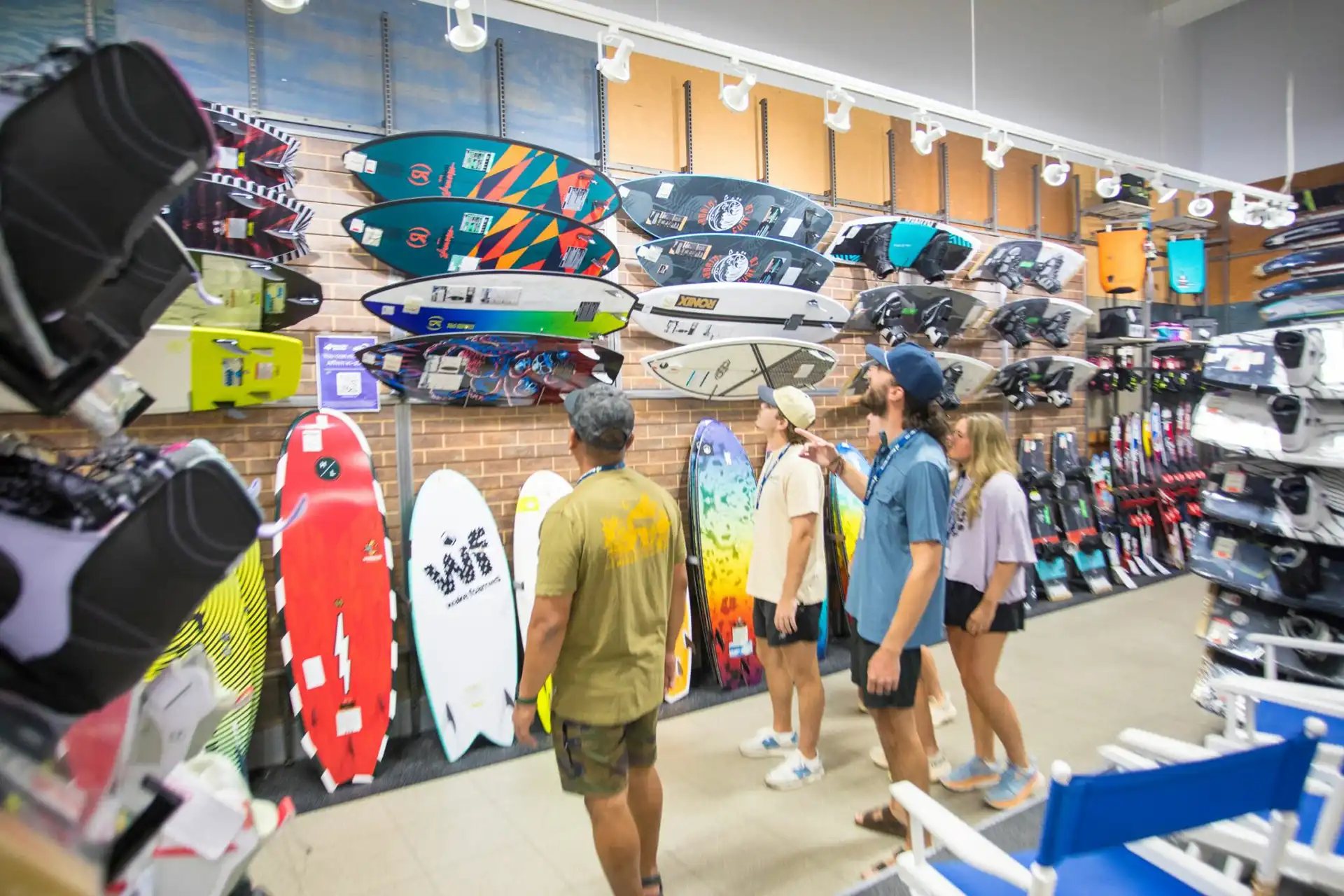
Before you even hit the water, protect your investment. Foil wings are made from durable carbon fiber or fiberglass, which keeps the board light and strong, but also makes the wings sharp and fragile. Keep the protective covers on until you are ready to ride to avoid dings, scratches, and other wear while moving around the boat. A little care goes a long way toward keeping your gear in top shape.
Step 2: Get Your Foot Placement Right
- Back Foot: Place it just in front of the mast. This is your anchor point and helps you control the board.
- Front Foot: Position it about shoulder width from your back foot or wherever feels most comfortable. This helps with balance and lets you shift your weight smoothly.
- Key Tip: Always keep your back foot in front of the mast. If it slides behind, you may wobble or tip over.
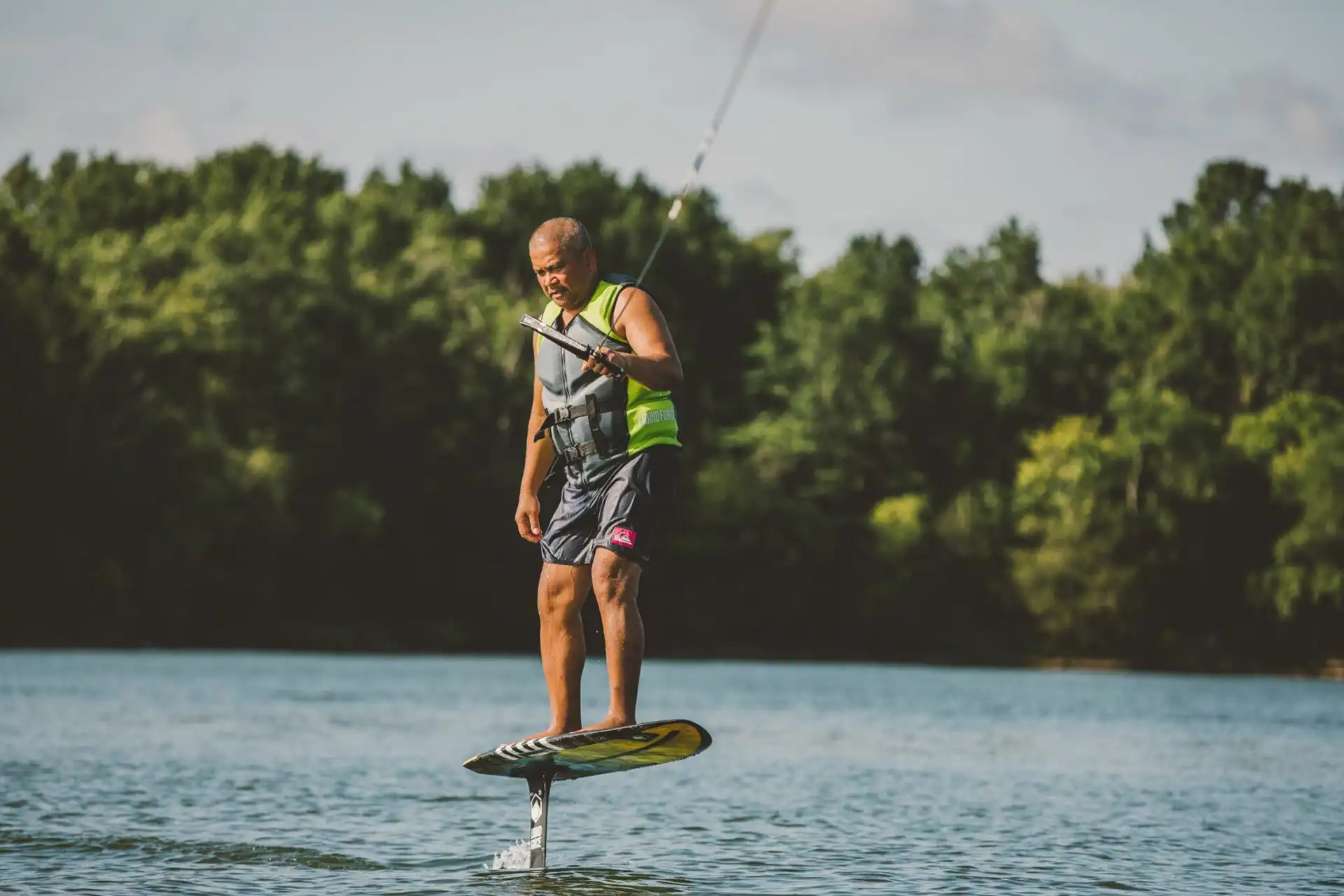
Starting with this stance will give you better control and stability, making your first rides much more fun and less stressful!
Step 3: Learn the Weight Shift
If you have experience with wakeboarding, you might notice some similarities, but there is one major difference in foiling: your front foot does most of the work at the start.
- When starting: Keep most of your weight on your front foot to prevent the foil from lifting too early.
- Once stable: Gradually shift some weight to your back foot, triggering the foil’s wing to lift you above the water.
- Pro Tip: Think of it this way: front foot for balance, back foot for lift.
Step 4: Fall Safely

Falling is part of learning to foil, and knowing how to do it safely will help you get back up faster and enjoy the ride!
- Always fall away from the foil wing!
- Hold the rope just a moment longer, letting it pull you past the board, giving you a smooth, easy reset.
- Try to relax your body when you feel yourself falling- tensing up can make the impact feel harder.
Step 5: Start Slow
Wake foiling requires a gentler take-off than wakeboarding or wake surfing. If the foil’s wing catches too much water too quickly, the board might lift abruptly, throwing off your balance! Follow these tips below to get a steady start every time:
- Boat speed: Aim for 11–14 mph.
- Rope: Use a longer rope (a wakeboard rope works great for beginners!)
- Acceleration: Begin with a slow pull to avoid engaging the foil too soon. Once you’re up and balanced, the driver can gradually increase speed.
Step 6: Practice Lifting and Landing
In your first sessions, it helps to focus on smooth, controlled lifts and landings so you can get comfortable with the foil:
- Start flat: Keep the board flat on the water, and put most of your weight on your front foot.
- Lift into flight: Slowly shift your weight back to engage the foil and lift the board above the water. Stay calm and focus on balance.
- Land gently: Move your weight forward again to lower the board back onto the water in a smooth, controlled motion.
Step 7: Keep Progressing
Like any new sport, wake foiling takes a little practice to get the hang of. The more you ride, the more your body will naturally know when to lean, lift, and glide. Stay patient, laugh at the falls, and have fun on the water!
Gear Up for Success
At Sun & Ski Sports, we have all the gear you need to start flying, from wake foiling boards and packages to watersports life jackets and accessories. Got questions or want some hands-on advice? Drop by your local store and let our Outdoor Experts help you find the perfect setup for your skills and style, so you can get out on the water and start gliding!
If you’re new to watersports in general, there’s a whole world of fun waiting for you! At Sun & Ski Sports, we have pro tips for wakeboarding, water skiing, and everything in between. Check out our most helpful guides, like 4 Steps on How to Do a Deep Water Start on Water Skis , Wakeboard and Wake Surf Safety Tips [2025]: Expert Advice for a Safer Ride , and more – perfect for anyone ready to make the most of their time on the water. See you on the water!

About the Author, Allie Cheney
What’s up?! I’m Allie, a Texan turned mountain enthusiast. After a year of croissants and conjugations in France, where I completed an MBA, I traded baguettes for mountain air and moved to Colorado. As a Copywriter and Content Creator for Sun & Ski Sports, I’m thrilled to share my 6 years of outdoor industry knowledge with you! Living in a converted van, I’m spending my time in the Rocky Mountains and West Coast this winter. I aim to deliver content that is not only accurate and genuine, but also provides valuable insight to your favorite hobbies, the latest trending styles, and cutting-edge products. For questions feel free to email me at ACheney@sunandski.com or contact an Outdoor Expert at any store location near you!