
What is my foot arch type? Why is it important? Trying to reach your running goals is no easy task. For many, running is all about reaching that “next step,” whether that means pushing themselves to the next gear, completing the next mile, or even finishing with the last step. Regardless of your running style or what your running goals are, your gear should boost your performance, not hinder it. This is especially true for your running footwear. While having proper running attire can definitely help with your running outcomes, the most important piece of equipment is your running shoes.
Proper running shoes, along with the correct fit, can make a big difference between accomplishing your running goals, or not. Improperly fitted shoes can even cause significant injuries to your foot, ankle, and sometimes legs. By understanding your arch type, you can take the first steps towards getting the right footwear.
Find Your Arch
The most common issue with runners is not getting the right fit in their shoes. Much of this has to do with finding the right shoe that matches your foot arch type. Each individual has a different foot arch, much like a unique fingerprint. Generally, these arch types are categorized into three different types- normal (or neutral), flat, and high. By understanding your arch type, you can choose the right shoes, or get the correct insoles, and ultimately provide the best amount of support and stability to your legs as you run.
Another reason why it is necessary to know your arch type is so you can correct any pronation you have when you run. Pronation is basically the rotation of the foot as you run. Some people naturally have neutral pronation, usually associated with a normal arch. Overpronation or ender-pronation is when your foot turns too much or too little when running. Instead of evenly distributing the impact of the ground around the foot, over and under pronation focuses the force on one side or the other of the foot, which can lead to injuries.
The best way to find out your arch type is by getting your feet wet and making a print on paper. It is best to you use some contrasting paper-like brown construction paper. That way, your foot and arch can easily be seen. Once you have your print, the next step is to identify what your arch type is.
Neutral Arch
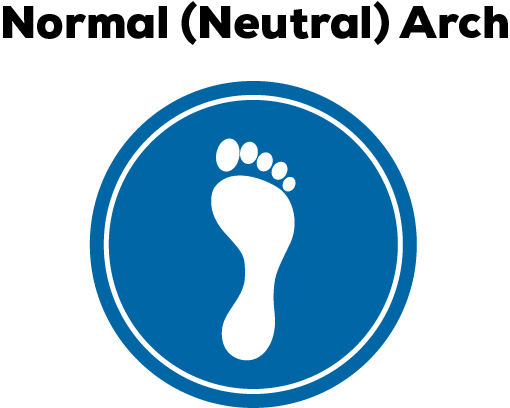
Runners who have a normal arch tend to have the right amount of pronation. This means that the force of their foot hitting the ground is spread out evenly around the foot. Normal arched feet tend to look like what you would imagine a typical footprint to look like. You’ll have the back part of the foot curve into the wider part of foot near the toes. In these cases, you’ll need running shoes that have stability. These shoes usually have most features, but won’t do anything to correct your pronation. For example, the will have some elements of stability and cushioning. Overall, itwon’t affect your pronation, but will provide support for your feet as you run.
Flat Arch
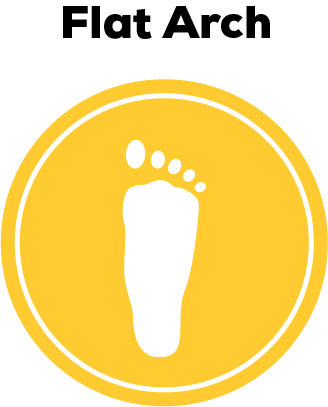
For those who have flat arches tend to overpronate. This means that the ball of your feet and your big toe take much of the impact force when running. Flat arched feet tend to look like there isn’t much of an arch at all. Instead of a narrow midfoot between the heel to the toes, you’ll have a large midfoot section. With flat arches, we typically recommend motion control running shoes. These types of shoes help correct over pronation with a more rigid shoe structure. This prevents the foot from twisting and unevenly distributing the impact of the ground.
High Arch
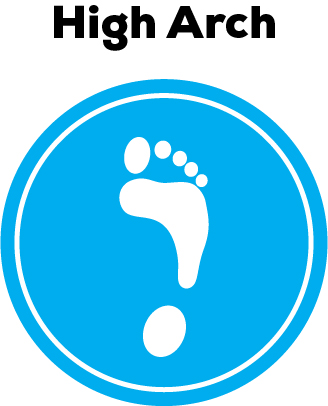
Runners with high arches tend to under-pronate. This usually puts a lot of pressure towards the front of the foot. High arched feet tend to have little to no midfoot area. The heel of the foot is sometimes drawn in at a sharp angle, followed by another sharp angle towards the front of the foot. For those with high arches, we recommend shoes with more cushion. These types of shoes generally have a more flexible sole to encourage more pronation. At the same time, there is more cushioning to protect your feet from the impacts of under-pronating as you run.
By figuring out what your arch type is, you’ll be able to start to understand your overall running style. With the right footwear, you’ll be able to reach your running goals and push yourself further towards your next running adventure. Have more questions about running shoes or what your arch type is? Come into any of your local Sun & Ski Sports to talk to one of our running experts. There, we can help assess your running, help you find your arch type, and help you choose the right running shoes for you!