
If you spend your summers on a lake, then you’re likely already into watersports and have your favorite activities. But if you’re new to the watersports life and are interested in learning which type of boat-towed board sport you should start with, our Outdoor Experts are here to help.
The short answer: A wakeboard straps your feet into bindings and uses a boat moving 18 to 24 mph so you can launch tricks off the wake. A wakesurf board has no bindings at all, uses a slower 9 to 12 mph boat speed, and lets you drop the rope and surf the wake freely. A wake foil board mounts a hydrofoil underneath that lifts the board (and you) entirely above the water’s surface, at that same slower 9 to 12 mph range.
Wakeboarding, wakesurfing, and wake foiling all involve a board, a tow rope, and a boat, but the activities differ from there. Not only do all three respective sports require their own unique types of boards, but the techniques and overall ride experiences are quite different as well. And, as you’d expect, some are better suited for beginners than others.
Below, we’ll compare all three sports and their boards, so you can decide which is best for you. Then, once you know which is calling your name, head to Sun & Ski Sports to shop all things watersports.
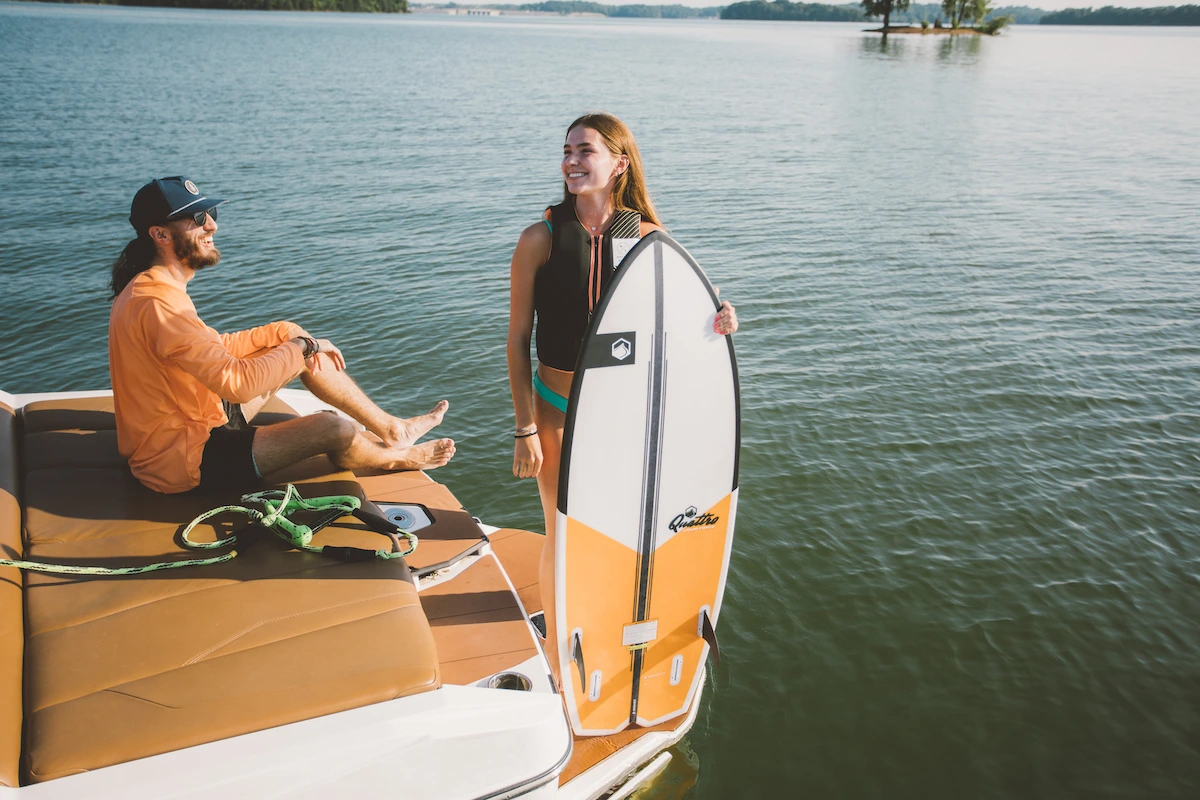
Table of Contents
What’s a Wakeboard?
What’s a Wakesurf Board?
What’s a Wake Foil Board?
How Do Wakeboarding, Wakesurfing, and Wake Foiling Compare?
Which Should You Try First?
Frequently Asked Questions
Let’s Hit the Lake
What’s a Wakeboard?
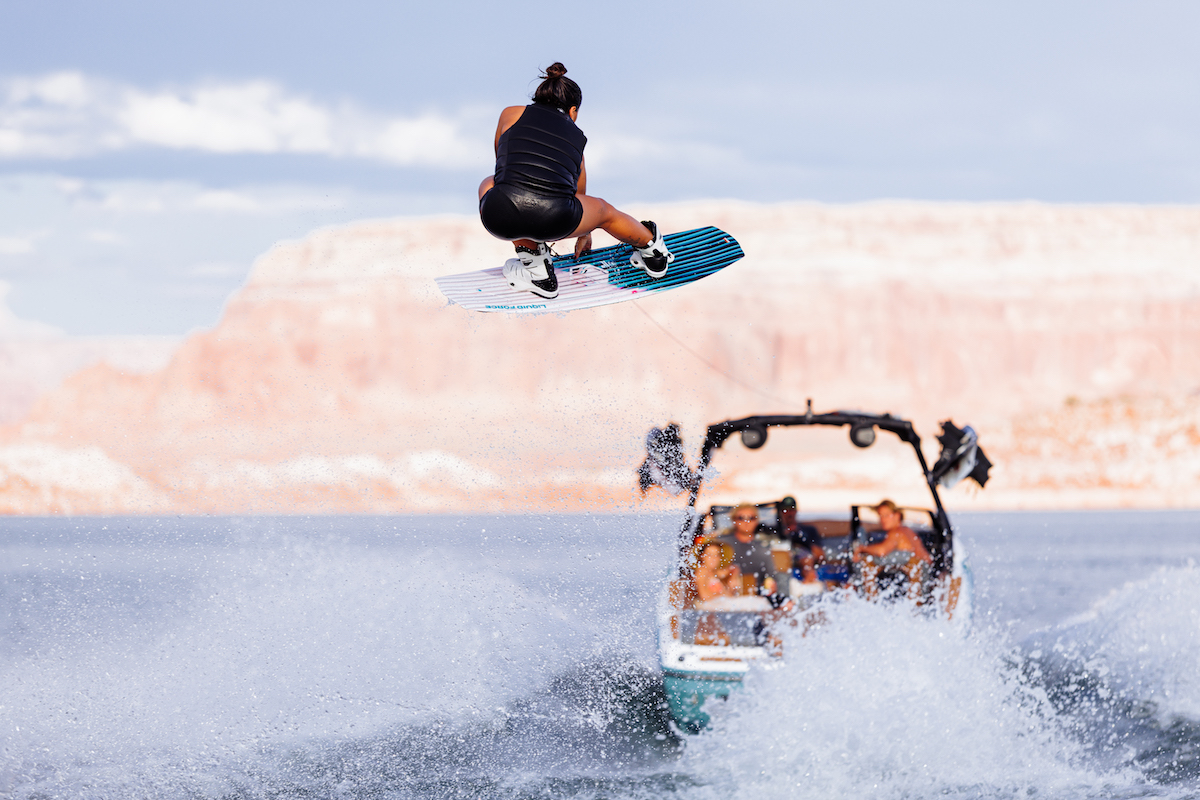
You can think of a wakeboard as being similar to a snowboard in the sense that it features bindings and boots. Of all three sports, wakeboarding has you moving the fastest, and it is also the best for performing tricks and getting an action-packed ride.
Wakeboard Design and Composition
These boards are oval-shaped and typically symmetrical. They have a “rocker” shape, which means the board curves slightly upwards from the center to the front and back tips. Most wakeboards have fins, though whether they are built-in or removable differs from board to board.
Wakeboard Bindings
Wakeboards have bindings, and your feet are strapped into boots.
Tow Rope Requirement
You hold onto the tow rope the entire time you wakeboard, allowing the boat to pull you as you ride the wake.
Boat Speed Recommendation
The boat should be moving in the 18 to 24 mph range.
Wakeboard Riding Style
Wakeboarding is fast-paced and allows for jumps, spins, and other tricks.
If you want a deeper walkthrough before you buy, our wakeboard buying guide covers sizing, rocker types, and how to match a board to your skill level.
Who It’s Best For
Riders who want an active, athletic ride and plan to work toward tricks. It’s a good fit if you already have some board sport experience (skateboarding, snowboarding), since the stance and pop translate well.
Typical Cost
Wakeboards alone typically run $250 to $700, with bindings sold separately in the $150 to $300 range. Complete wakeboard packages that bundle a board with bindings usually land in the $350 to $700 range.
Shop WakeboardsWhat’s a Wakesurf Board?
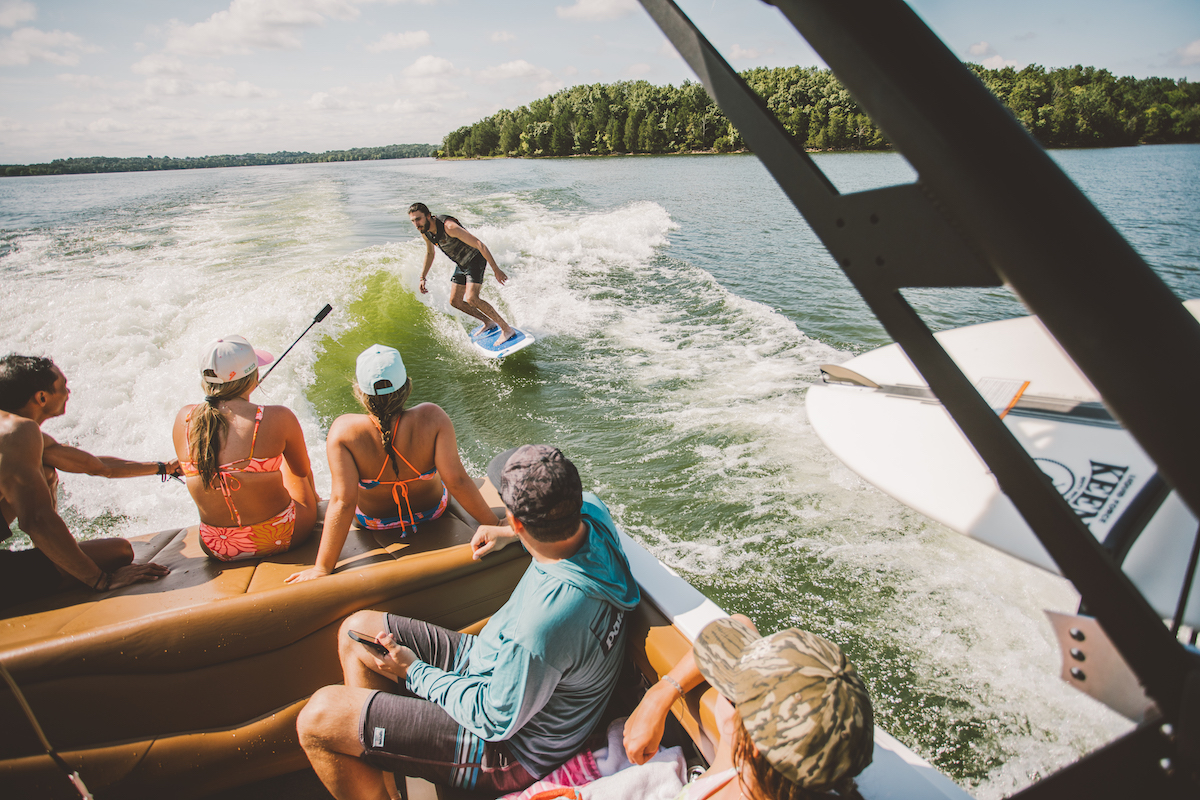
As the name implies, a wakesurf board is similar to a surfboard, just smaller. Compared to wakeboarding, wakesurfing is more relaxed. You also don’t hold onto the rope once you get up.
Wakesurf Board Design and Composition
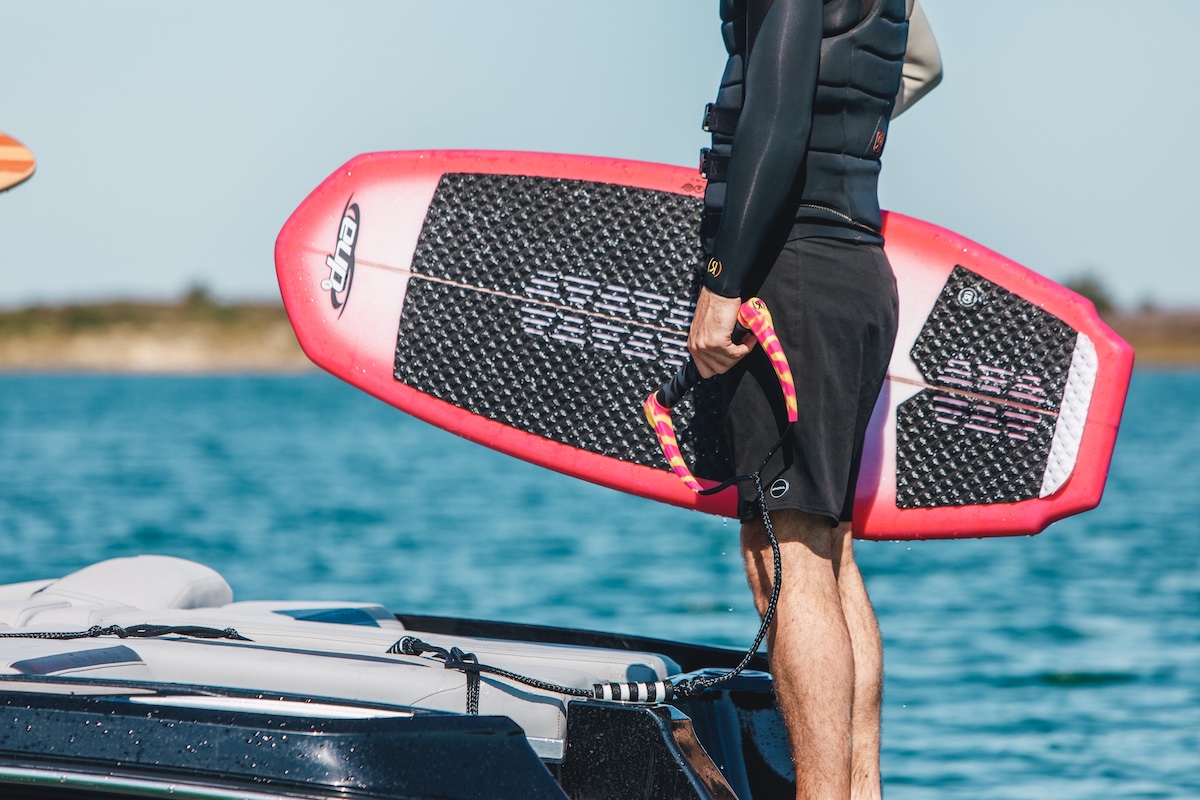
The front of a wakesurf board is pointed like a surfboard, and the back can either be similar or squared. It’s smaller and wider than a surfboard. The surface usually has some sort of textured foam material to provide grip for your feet, and the board also has fins.
Surf-Style vs Skim-Style
Wakesurf boards are usually categorized as either surf-style or skim-style. Surf-style boards are larger and more stable underfoot, allowing for a surf-like feel. Skim-style boards are thinner (like a skimboard) and better for those who want to incorporate some tricks.
Our wakesurf board buyer’s guide breaks down which style fits your riding goals and body type.
Wakesurf Board Bindings
There are no bindings on a wakesurf board, so you are not strapped in at all.
Tow Rope Requirement
You only hold onto the tow rope to get up. After that, you drop it and surf on your own.
Boat Speed Recommendation
The boat travels at around 9 to 12 mph.
Wakesurf Board Riding Style
With wakesurfing, the goal is to surf and carve the boat’s wake. Therefore, it’s more laid-back and less trick-focused.
Who It’s Best For
Beginners, families, and anyone who wants a lower-impact ride. Since there’s no gear strapped to your feet and the boat moves slower, falls are gentler, and the learning curve is shorter than either wakeboarding or wake foiling.
Typical Cost
Wakesurf boards typically range from $300 to $1,000 or more depending on construction and brand, with beginner-friendly and youth boards on the lower end and performance surf-style boards at the top.
Shop Wakesurf BoardsWhat’s a Wake Foil Board?
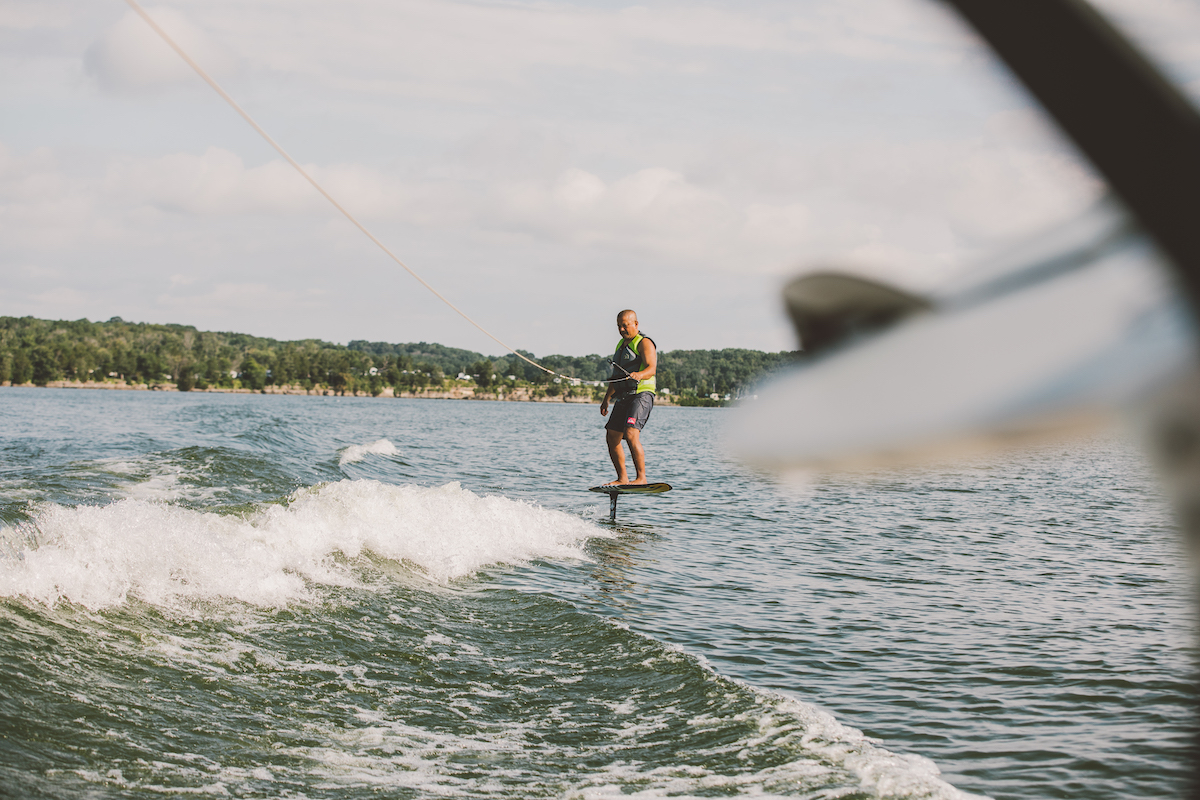
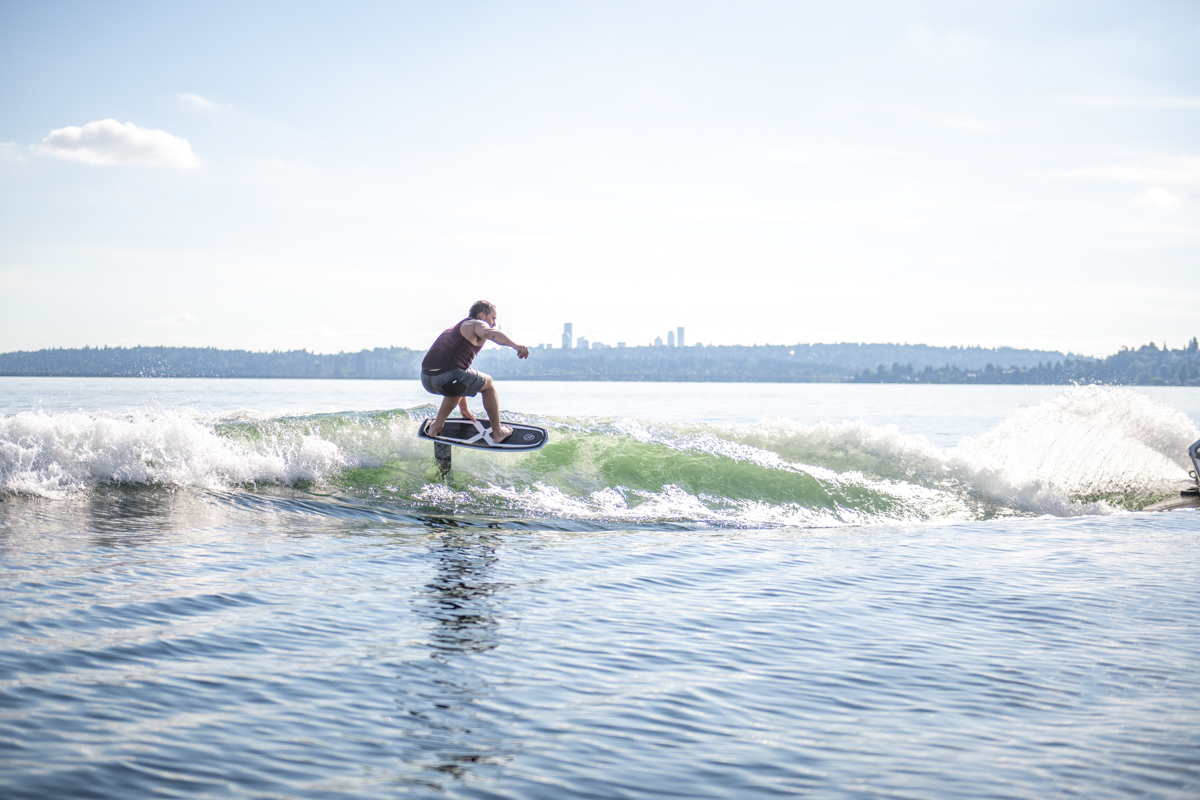
A wake foil board is in a class all its own, as it has a hydrofoil attached to the bottom of the board to generate a lift above the water. Once up, it’s almost like you’re floating or flying above the water. Wake foiling has more of a learning curve to achieve that lift, as you have to be quite precise to gain control.
Wake Foil Board Design and Composition
A wake foil board is small and wide, with a hydrofoil mounted underneath. The hydrofoil features a large front wing for lift and a smaller back wing for stability. The nose and tail of the board are more rounded and squared off, rather than pointed.
Wake Foil Bindings
Typically, wake surf boards don’t have bindings, though some can feature straps to keep feet attached to the board.
Tow Rope Requirement
After using the rope to get up, you can either drop it or keep holding it to have it tow you along.
Boat Speed Recommendation
As with wakesurfing, the boat travels at 9 to 12 mph.
Wake Foil Board Riding Style
Wake foiling involves pumping and gliding. It can take some tries to get up, but once you do, the ride is smooth. A huge benefit of being lifted above the water’s surface is that choppy waters have little to no effect on your ride (once you’re up, of course).
New to the sport? Our step-by-step wake foiling guide walks through foot placement, weight shifts, and getting up on foil for the first time.
Who It’s Best For
Riders who already feel comfortable behind the boat and want a new challenge. It also suits anyone dealing with rough or choppy water, since foiling above the surface smooths out conditions that would ruin a wakeboarding or wakesurfing session.
Typical Cost
A wake foil board alone typically starts around $600, but most riders buy a complete setup that includes the board, mast, and foil wings, which generally runs $1,500 to $3,400 depending on the performance level.
Shop Wake Foil BoardsHow Do Wakeboarding, Wakesurfing, and Wake Foiling Compare?
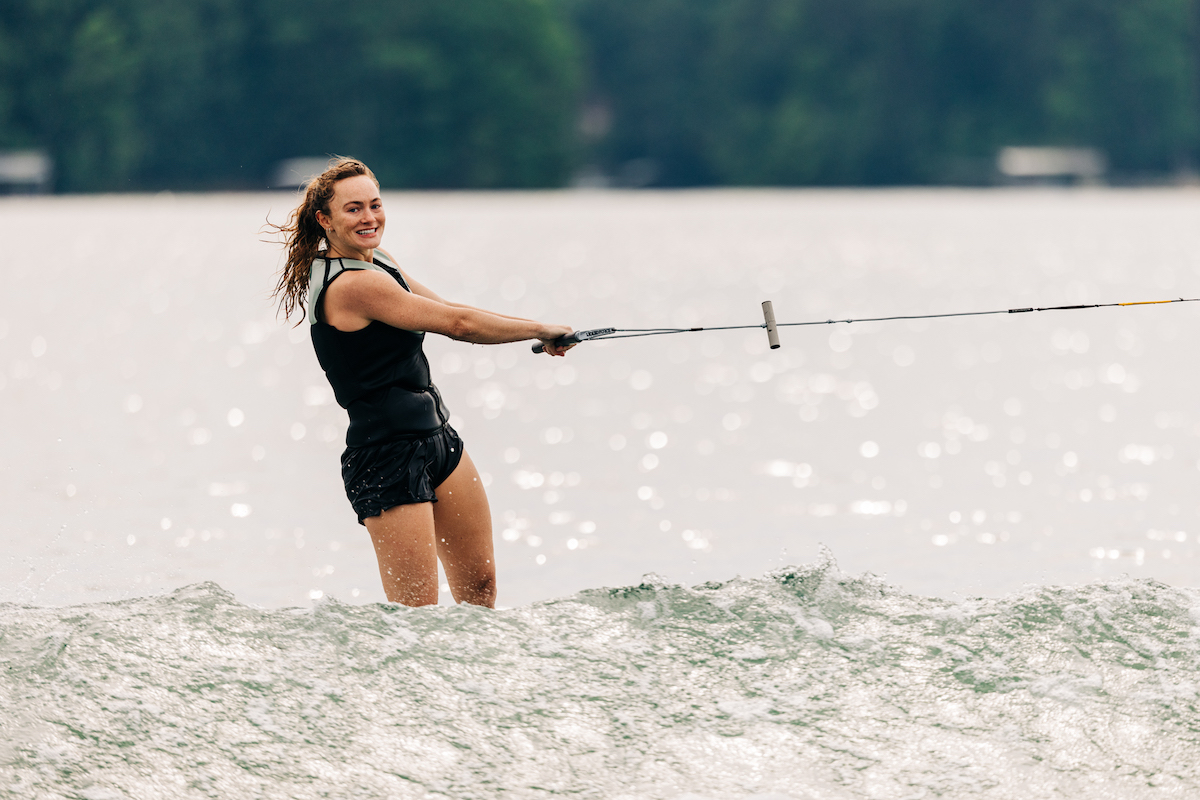
Now that you have the specifications of wakeboards, wakesurf boards, and wake foil boards down, which sport is right for you? Off the bat, we can say that wake foiling is the most difficult to learn, as it’s a unique experience and the board is also very sensitive to minor movements. But once you master getting that lift, it’s pretty much smooth sailing from there.
Between wakeboarding and wakesurfing, wakesurfing is the best suited for beginners. Due to its laid-back ride, and the fact that the boat isn’t going as fast, it’s a bit more forgiving. Plus, there’s less of an emphasis on jumps and tricks, which naturally makes things more beginner-friendly.
Wakeboarding lands somewhere in the middle. First, you have to learn how to get up, and then it takes practice to bump things up to the next level with tricks. Also, since you hold the rope the entire time, you’re moving consistently fast, which makes it more high-stakes than wakesurfing.
Which Should You Try First?
If you’re still deciding, here’s a simple way to think about it:
- New to watersports or bringing the whole family? Start with a wakesurf board. The slower boat speed and lack of bindings make it the most forgiving entry point.
- Coming from skateboarding or snowboarding and want tricks fast? Go with a wakeboard. The bindings and stance will feel familiar, and the sport rewards that background quickly.
- Already comfortable on the water and looking for something new? Try wake foiling. It has the steepest learning curve of the three, but it also gives experienced riders a genuinely new sensation, and it’s a great option if your lake tends to get choppy later in the day.
Frequently Asked Questions
Is wakesurfing easier to learn than wakeboarding?
Yes, most beginners find wakesurfing easier. The boat moves slower, you’re not strapped into bindings, and the sport is less focused on jumps and tricks, so falls tend to be gentler.
Which is the hardest to learn: wakeboarding, wakesurfing, or wake foiling?
Wake foiling has the steepest learning curve. Getting up on the foil takes precision, and the board reacts to small shifts in weight far more than a wakeboard or wakesurf board does. Once a rider gets the lift dialed in, though, the ride smooths out quickly.
Do you need a different boat setup for each sport?
Wakeboarding needs a boat capable of a steady 18 to 24 mph. Wakesurfing and wake foiling both use a slower 9 to 12 mph range, but a good wakesurf wave typically calls for a boat with ballast or a wake shaper, while wake foiling can work behind most boats with a motor over 30 horsepower.
How much does a wakeboard cost compared to a wakesurf board or wake foil board?
Wakeboards generally run $250 to $700 for the board alone, with bindings sold separately. Wakesurf boards run $300 to $1,000 or more. Wake foil boards start around $600 for the board alone, but a complete setup with the mast and foil wings usually runs $1,500 to $3,400.
Can a beginner learn wake foiling, or should they start with wakesurfing first?
A beginner can learn wake foiling directly, but most riders find it easier to build board feel on a wakesurf board first. Wakesurfing teaches balance and weight distribution at a slower speed, which carries over well once you move to a foil.
Do wakeboards, wakesurf boards, and wake foil boards use the same size boat wake?
No. Wakeboarding uses the boat’s speed to create a firmer, ramp-like wake for jumps. Wakesurfing and wake foiling both rely on a boat moving slower with added ballast or a wake shaper to build a larger, rolling wave, though wake foiling needs far less wake size to work since the foil generates its own lift.
Is one of these sports safer than the others?
Wakesurfing tends to be the gentlest on the body since falls happen at slower speeds and without bindings locking your feet in place. Wakeboarding carries more impact risk due to speed and tricks. Wake foiling has its own risks tied to the mast and fin, so a helmet and life vest are recommended for all three. Check our safety tips before heading out.
Let’s Hit the Lake
Now that you know the difference, the only thing left to do is match your gear to your choice. If you’re heading out for your first wakesurf session, start with our wakesurf board buyer’s guide and this season’s best wakesurf boards. Ready to try foiling? Our how-to-wake-foil guide will get you up on your first flight. And whatever you choose, review these safety tips before you head out. For hands-on help picking the right board, stop by a Sun & Ski Sports location and talk with one of our Outdoor Experts.

About the Author, Sydney Fogel
Hi, I’m Sydney! I’m a writer and editor living in San Francisco. After attending college and kicking off my career in Boston, I made my way back to the Bay Area, where I grew up. When I’m not working, you can find me enjoying everything my beautiful area has to offer, from spending time at the beach (I live just a few blocks away!) to climbing those San Francisco hills to check out the latest restaurant. I’m also super into working out and have been dancing my entire life. Feel free to reach out at sfogel11@gmail.com