
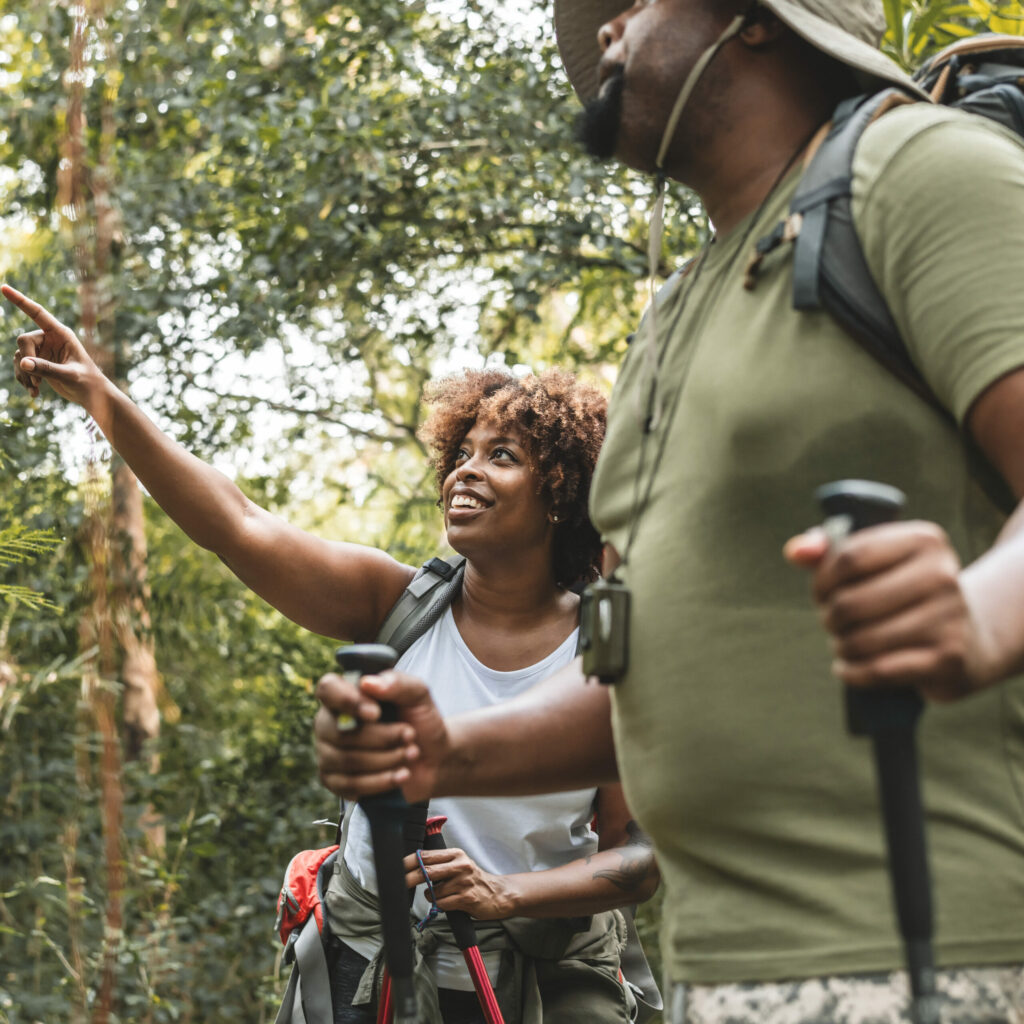
 Couple trekking in the forest together
Do you need trekking poles? Imagine going on a hike on the Crystal Lakes Trailhead up in Mammoth Lakes, California. While it starts off nice and easy, eventually the terrain gets a bit varied, eventually leading to some stiff climbs. At this point, you really wish you had some trekking poles. Hiking long distances is a full-body workout, and trekking poles can help alleviate stress and distribute the loads as you hike. What are trekking poles and what are their uses?
What Are Trekking Poles?
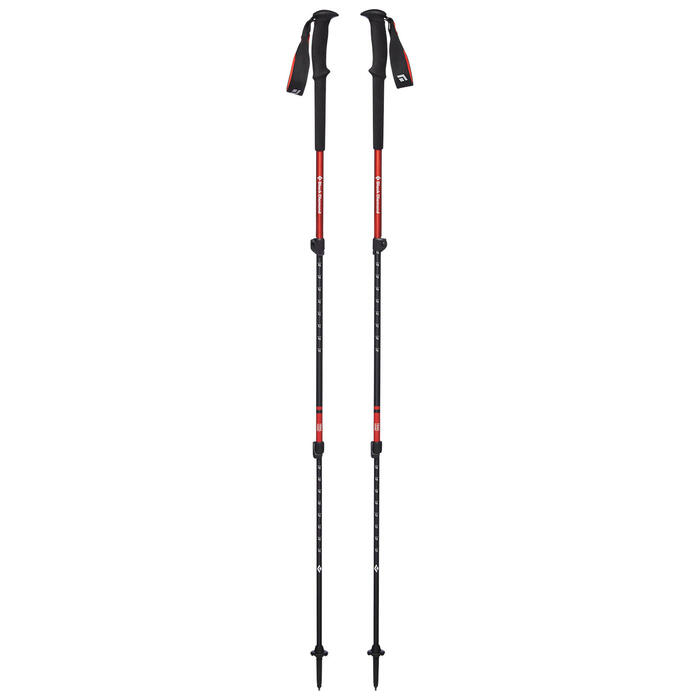
Simply put, trekking poles are the hiker’s version of ski poles. Although not essential for hiking trips, they can make your hike more pleasant by providing additional support and stability, especially on rough terrain and arduous mountain slopes. Before heading out, make sure the trail you are taking is the right one for you. Check out our hiking trail guide for more info on trail difficulty levels.
The main flaw of trekking poles is the fact that you need to find room for them in your gear when you aren’t using them. However, many hikers and backpackers find that the pros far outweigh the cons.
Why Should I Use Trekking Poles?
There is a lot of scientific evidence that points toward the use of trekking poles over the long-term being beneficial to the body during mountaineering or hiking on rough terrain: A 2010 study found that trekking poles are good for significantly reducing exercise-induced muscle injuries during mountain climbing, as well as assisting in retaining muscle function in the days after the trek. A 2008 study found that using trekking poles increased the body’s physiologic response (higher energy input) without the perception of more effort. A 2007 study found a reduction in the amount of force, moments, and power around joints.
The Main Uses of Trekking Poles
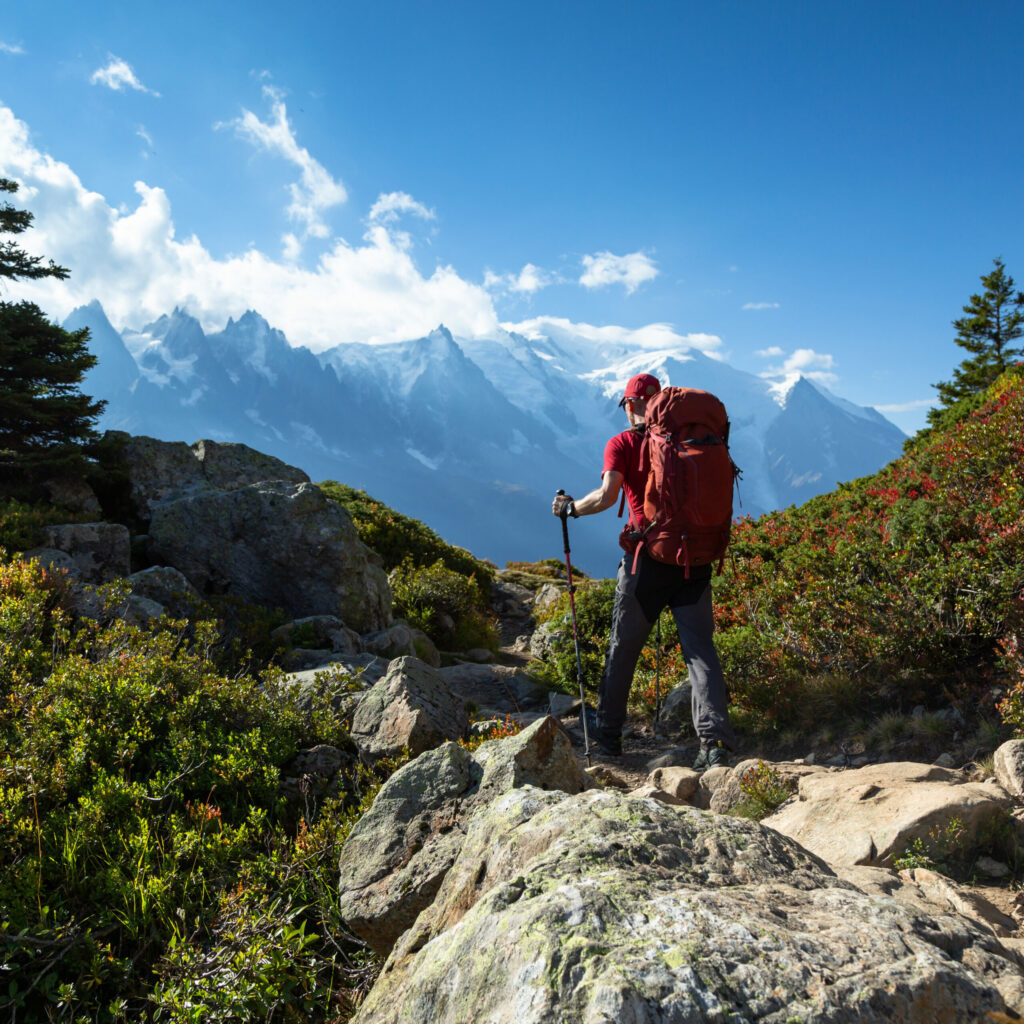 A man hiking on the famous Tour du Mont Blanc near Chamonix, France.
Trekking poles have various uses throughout your hike or adventures. Overall, it can be an invaluable tool depending on your situation. Besides providing stability on steep or uneven surfaces, such as hills, loose rocks, and water crossings, they can help you…
Have Less Stress on Joints
Trekking poles help relieve the knee, ankle, and hip pain often associated with hiking.
Improve Posture
Backpackers often find themselves hunched over as they bear the weight of their pack on their back. A pair of Black Diamond Hiking Poles allow the user to apply forward pressure with their arms, allowing them to straighten their back and bear the additional weight more naturally.
Cross Streams
Stream beds can seem daunting. But with the help of a trekking pole, you can be at ease. Use the pole to navigate your way. It can help you check the water’s depth. Or, if you happen to slip on rocks, the pole can give you extra support.
Move Through Deep Snow
Sometimes the snow can make crossing even the shortest distance a chore. With a trekking pole, a third or fourth point of contact can keep you from falling into the snow. Use it to check how deep the snow is, and be on your way.
Move Painful and Poisonous Plants
Have you ever suffered from the aftermath of touching poison oak/ivy, stinging nettle, honey-locust, a rose-bush, giant hogweed, or other sharp or poisonous plants? Using a trekking pole as a bushwhacker could be your saving grace from days, weeks, or even months (in the case of giant hogweed) of irritation.
Alleviate Swollen Hands
Using a trekking pole will keep your hands closer to your heart, improving venous blood flow (the blood going back to your heart) and therefore reducing the swelling in your hands.
A Make-Shift Shelter
You can also come up with ways to multipurpose your trekking pole in order to remove weight from your pack. If you are using an ultra-light shelter, you can use your trekking poles in place of tent poles.
Trekking Pole Features
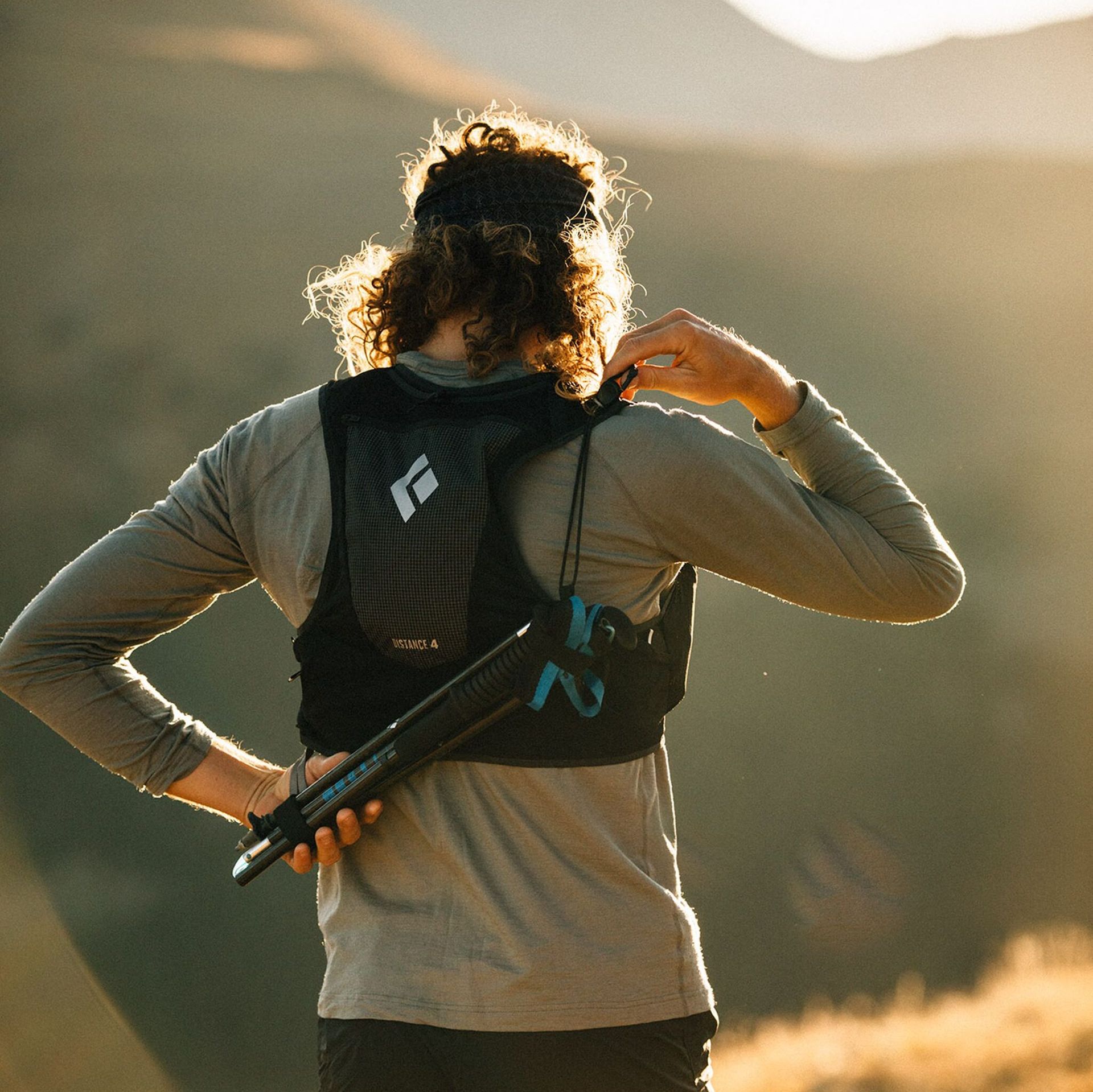
When choosing trekking poles, there are a few features to look for. One such feature is wrist straps. While seemingly a small and insignificant feature, wrist straps are handy when you lose your grip and don’t want to expend energy bending down to pick up your fallen poles. Picking up objects off the ground constantly can be pretty difficult, especially if your back muscles are tired from carrying a heavy pack.
Another great feature is collapsible or telescopic models. This allows for easier and more compact storage and can free up space on your overall gear load.
Whether you’re going for an afternoon hike with the family or planning a multi-day excursion, be sure to visit your local Sun & Ski Sports for the best gear and advice. Or, check out the Adventure Resource Guide (ARG). The ARG has tons of articles containing helpful tips and tricks for your next adventure. There you can find articles such as our Hiking Trail Etiquette Guide and 6 Features of the Best Headlight.