
What is a base layer? What is a mid-layer? Are they necessary? Layering is critical to keeping you comfortable on the mountain. Proper base layers and mid-layers will help you keep warmth circulating through your body but also wick moister and sweat away during substantial activity. So what makes a good base layer and mid-layer? We’ll dive into all that below. If you want to learn more about layering, check out our layering guide.
Base Layers
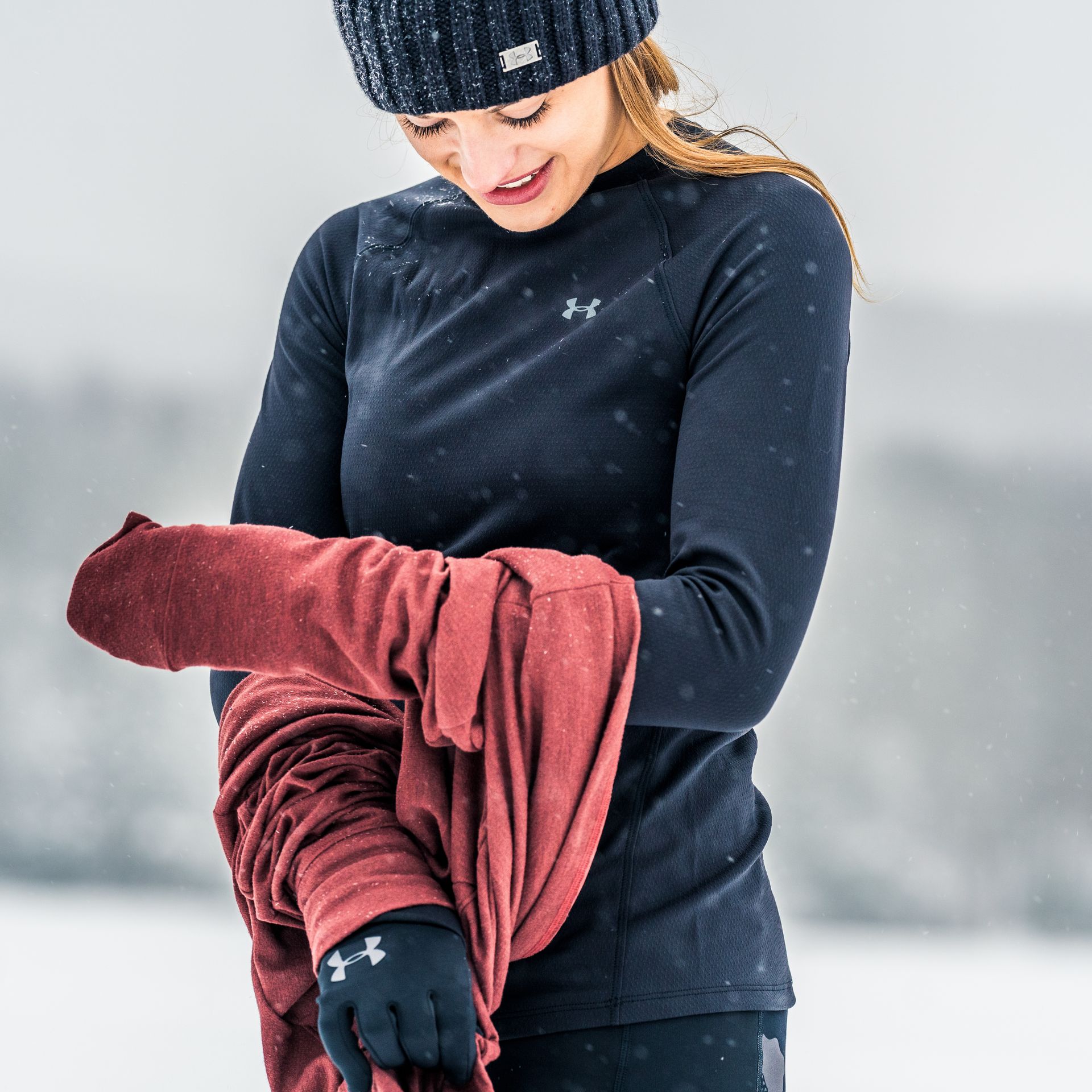
A base layer’s core responsibility is to manage moisture and maintain the body’s natural temperature. You will also want to look for key features such as moisture-wicking, quick-drying, and odor resistance. The most common materials that will help set you up for success are polyester, nylon, silk, and wool blends. Each of these fabrics will have different ratings on each element.
Fit
For your base layer to truly perform at its best and wicking away moister, your garment needs to lay against your skin. Not too tight where it may cut of circulation or limit maneuverability, but relatively fitted. Being closer to your skin will also allow the fabric to trap heat and keep it close to your skin. For warmer conditions, though, you may want a piece that is a looser fit to provide more breathability.
Materials
A base layer needs to be a material that wicks away moisture, moving it from your skin to your mid-layer. Without doing this, the build-up of sweat can actually soak your clothes and transfer heat away from the body causing you to become cold. They can be made from a variety of materials. Depending on your needs, you have multiple options including…
Polyester
This material exceeds in moisture-wicking, dry time, durability, weight, and price. While not so great with warmth or odor resistance, polyester will provide an excellent option for your base layer in spring conditions or excess heat.
Nylon
Known for its durability, Moisture-wicking performance, dry time, weight, and price, nylon is an incredible option for those looking for something simple. Although this may sound like an immediate winner, nylon has inferior technology when it comes to keeping in the heat and maintaining your warmth. It is also one of the worst fabrics for odor resistance.
Silk
Both nylon and silk are very similar in overall performance. But overall, silk will perform better with warmth and odor resistance. As for price point, silk usually has the worse price to performance ratio. So be careful when making your decision and partner with an expert.
Merino Wool
This fabric will have the best breathability over all others but can be the costliest of fabrics. Merino wool is highly rated for its warmth, even when wet, odor resistance, and Moisture-wicking performance. The brand Smartwool even comes with a lifetime warranty for any irregular wear and tear. As for being odor-resistant, Merino Wool will carry you through your activity and the rest of the day without a harsh lingering odor. It is absolutely the top material for keeping your smell fresh.
Cotton
Steer clear of all cotton materials and anything containing cotton in its blend. A cotton t-shirt is good at one thing: holding onto moisture. Which means your sweat stays right next to your skin all day. And that’s a good way not only to be uncomfortable but also to get cold.
Blends
With so many fabrics to choose some, most companies have opted to have multi blend options to help with overall performance. These combinations give you a bit more in each category.
It’s pretty simple. When it’s cold out, you need warm clothes to keep you from getting cold and stiff. But as you plow down the slopes or across open fields, you get hot — and start to sweat. And that’s where things get complicated.
Mid-layers
A mid-layer’s purpose is to insulate and move moisture from your base layer to your outer layer. A breathable jacket finishes the job by moving moisture away from the body — while providing insulation against cold and moisture coming in.
Fit
As we’ve said before, the mid-layers core design is to help move moisture away from your body. So more of a fitted yes, but enough room to allow movement and breathability to protection from varying conditions.
Fabrics
With so much relativity to base layers here are some additional fabrics that can benefit your mid-layer choice:
- Fleece: When it comes to moisture-wicking performance, fleece outdoes all fabrics. With great technology behind drying time, keeping you warm, and price, fleece provides an excellent option for your mid-layer choice.
- Down Fill: this type of insulation is ideal for keeping heat in and perform best in cold and dry conditions. With the proper shell layered above, down will also perform in wet and windy elements. Vest Down layers can be an excellent option for layering without restricting movement in your arms.
- Synthetic Fill: A synthetic fill layer is a quick-drying garment that will provide that extra layer of warmth that won’t break the bank. Not as warm as a down mid-layer, but unlike it, a synthetic fill will perform even when wet.
It’s important to know what kind of conditions you may encounter in your endeavor in the outdoors. Whether you are alpine skiing, snowboarding, backcountry backpacking, snowmobiling, or just enjoying your adventure ahead, your tech is a crucial element that will keep you comfortable, performing, and happy.
Have more questions on base layers, mid-layers, or layering in general? Visit your local Sun and Ski Sports and ask an expert to guide you through how to properly layer, help you pack for the snow, and assist you with our ski and snowboard guides.