Not only is biking extremely fun and fulfilling, but it’s also rewarding! With the ability to exercise outdoors, riding a bike allows us to connect with our bodies as well as surrounding nature. To fully enjoy your biking experience, it’s crucial to have a bike that caters to your needs and fits your body perfectly. And we’re here to help! This guide will help you understand bike geometry specifications, so you can buy a bike online with confidence. Customer experience is as important to us in-store as it is online, so let’s roll!
Note: While this guide primarily focuses on fitment for road bikes, it can also be applied to gravel bikes due to the similarity in bike measurements, riding distance, and riding positions!
How to Figure Out if You Need a Performance Bike or an Endurance Bike
Want to pick up road biking, but aren’t sure where to begin? If you’ve tuned into any cycling events such as the Tour de France, you’ll notice that cyclists position themselves aggressively, leaning low and hunching over. This posture enhances their aerodynamics to make them one with the wind. The types of bikes the cyclists ride here are called performance bikes, or race bikes. If you’re looking for a thrilling experience, you’ll love this type of riding. However, if aggressive road biking isn’t exactly what you’re looking for, there are “endurance” road bikes—which are designed to go the distance while still providing speed.
Cycling Adventures Like Never Before: Selecting the Best Frame Size for Your Road Bike
Thanks to the assistance of geometry size charts, selecting the appropriate frame size online has become much simpler! Luckily, each product in our online bike shop includes a geometry chart. Our comprehensive size charts have made purchasing a bike easier and more convenient than ever before!
When you browse through our online bike shop, you’ll notice that most road bikes list their frame size. The size is presented in numeric centimeters, rather than using terms like small, medium, or large. However, due to advancements in modern geometry, the numeric frame size is no longer directly related to any specific measurements on the frame itself. Since sizing can vary among manufacturers, we recommend following the details below the frame size on the chart. These specifics are crucial when buying a new bike, as a bike that fits you perfectly allows for maximum comfort, so you can enjoy your adventures for extended periods.
For Comfort When Mounting and Dismounting Your Road Bike: The Importance of Your Standover Height
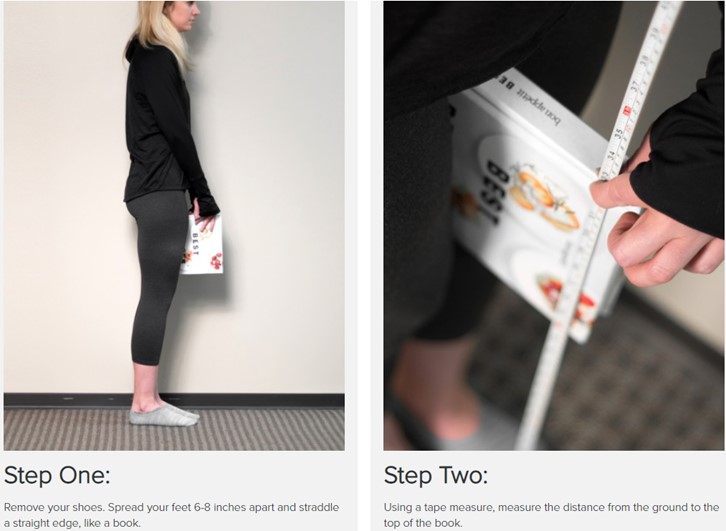
When picking out a new bike, the standover height is an essential measurement. Since it contributes to your sense of control when mounting or dismounting the bike, it’s important for your standover height to remain comfortable. To measure your standover height, plant both of your feet on the ground. Make sure there’s about 1 – 2” of spacing from your crotch to the top tube (that is, if it’s a straight top tube. If it’s a sloping top tube, we recommend 2”+). Then, measure your leg length. For a visual representation, see below:
The Ultimate Road Biking Position Depends on Your Reach Position
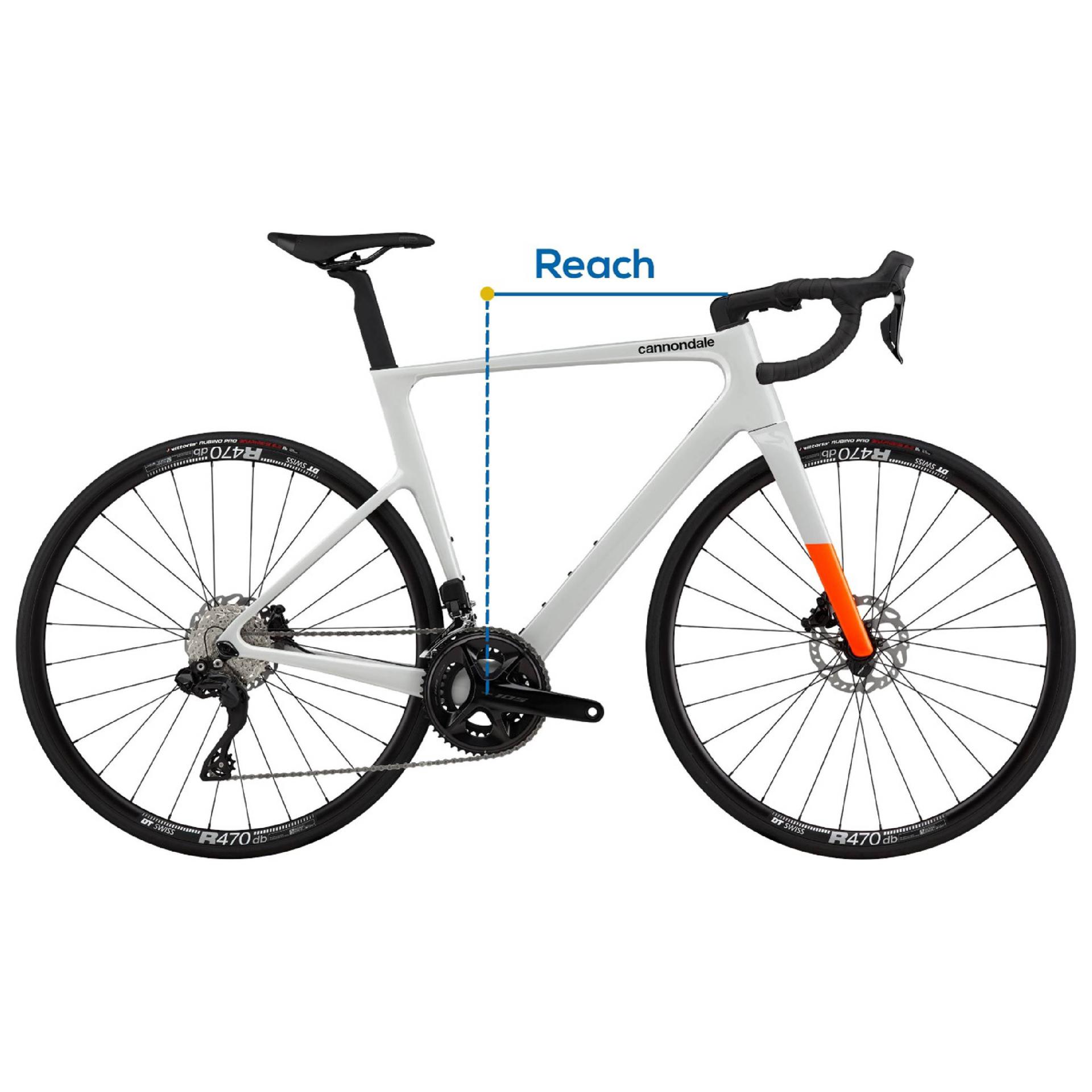 Reach on a bike frame is measured from the center of the bottom bracket to the center of the head tube.
Since your reach measurement dictates your riding position and how comfortable you’ll be throughout the duration of your biking experience, it’s crucial to take this measurement seriously. In fact, your reach measurement is equally as important as your standover measurement. If you’re planning to embark on long-distance rides, being overly stretched out over the top of your bike is not ideal. The type of riding you participate in will influence your reach measurements.
For performance and race bikes, the goal is to achieve a lower and longer position to enhance aerodynamics, resulting in a longer reach and lower stack. On the other hand, an endurance road bike requires a more upright position. Ideally, for a performance/race road bike, your torso angle with the hip should be anywhere from 40° to 50° as you rest your hands on the hoods of the handlebar. But if you’re riding an endurance road bike, we recommend a higher torso angle to open yourself up more.
To get an approximation of your reach, you can simulate reaching for an imaginary bike. Sit in a chair with your legs at a 90° angle and reach forward to the edge of a table. Keep your arms in front of you, elbows slightly bent, shoulders relaxed, and maintain a neutral spine. Set yourself in the 40° to 50° (or greater) angle and measure directly across from where you grab at the edge of the table, which is where you use as a reference for the center of the head tube and measure flat across to where you feel like the top of your shoulders are at. Ideally, this could be your belly button or chest depending on the height of your table. It’s important to measure flat across, and not at an upward angle toward the top of your shoulders, so you can have an accurate measurement.
Determining if Your Reach Measurement Needs to be Extended or Not with the Ape Index
Your “Ape Index” will indicate whether your reach measurement needs to be longer or shorter. To measure your ape index, simply stand against a wall with enough space and spread your arms out to your full arm span. Have someone mark each of the tips of your longest finger on both sides, then measure that entire distance. Next, measure your height, and then subtract your height from your arm span. If the resulting number is positive, it means your arm span is greater than your height, suggesting you should consider sizing up. Conversely, if the number is negative, it indicates that you should size down for comfort and proper fit.
Reaching for Your Road Bike’s Handles Will Hinder Your Biking Experience: The Importance of the Effective Top Tube
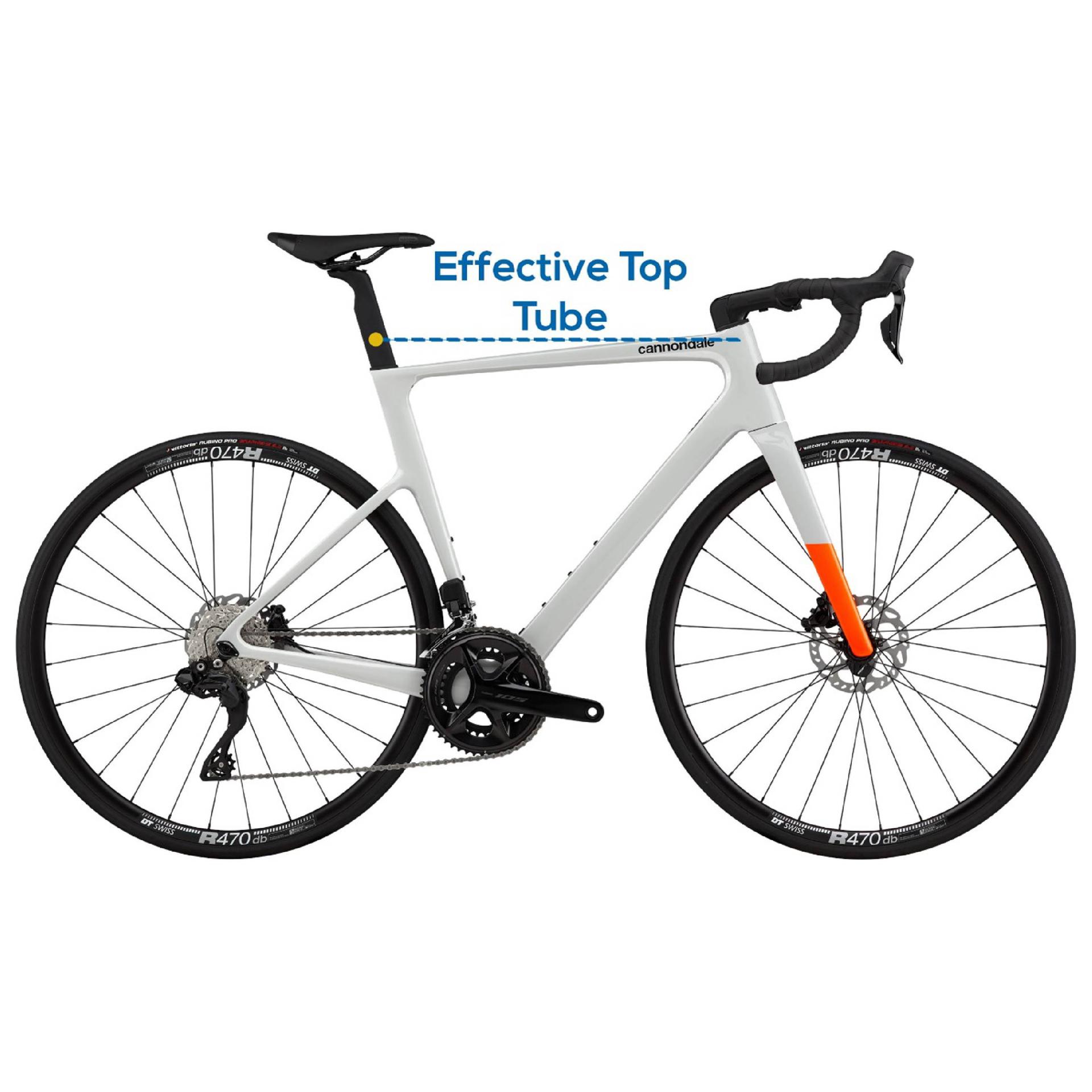
The top tube measurement can make your road bike feel longer or even shorter while you’re seated. This can affect your overall comfort when riding, as feeling like you’re reaching for the handles can negatively impact your experience, and similarly, being crunched up on your bike is equally as uncomfortable. We begin measuring the top tube by starting from the center of the seatpost and ending at the center of the fork’s steerer tube. If this measurement is horizontal, it’s considered as an “effective top tube”.
Finding Your Perfect Cycling Position with the Stack Measurement
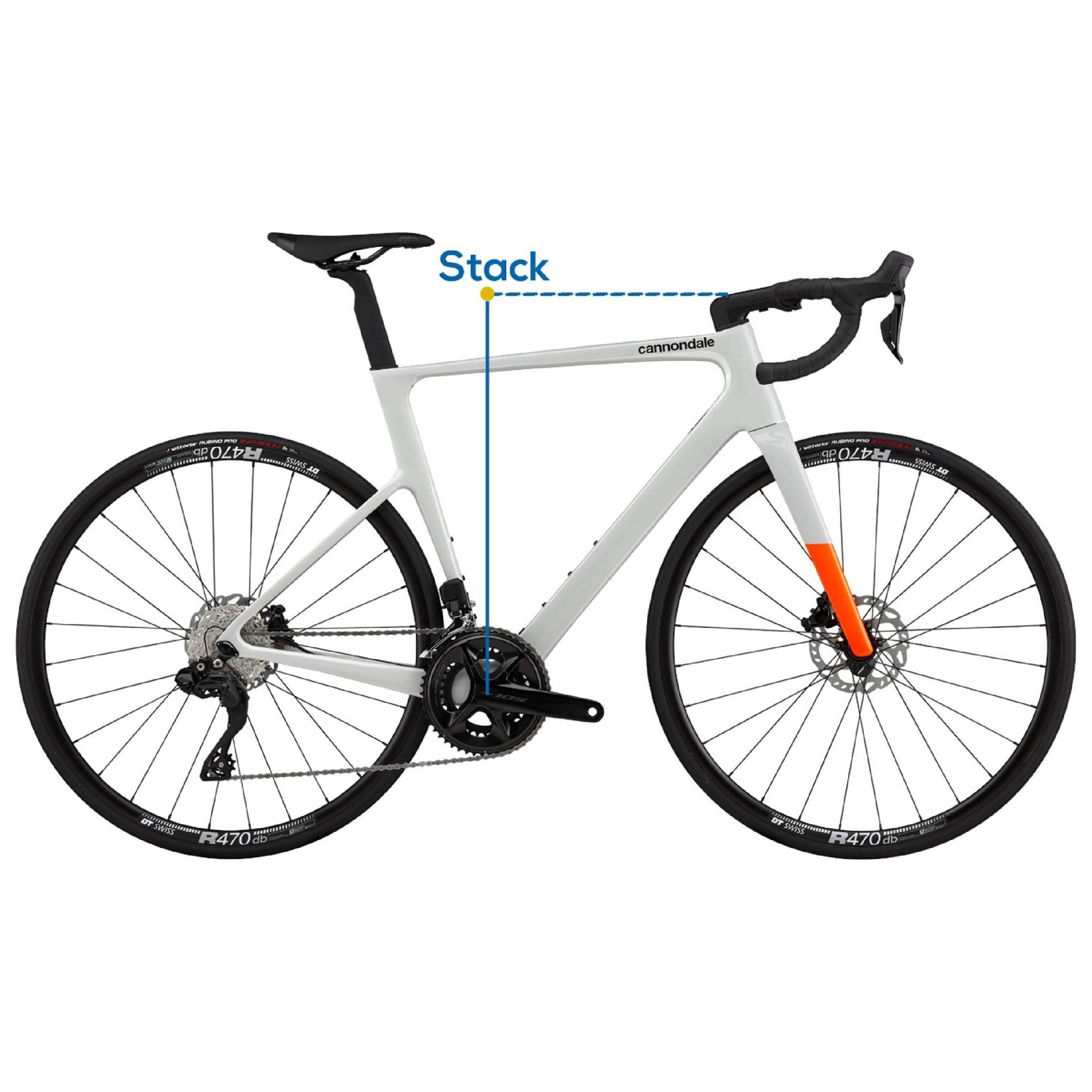
The stack is the vertical measurement which starts at the center of the bottom bracket and ends at the top of the head tube. Performance/race road bikes tend to have a shorter stack to complement the low, more aggressive position—while endurance road bikes, on the other hand, have a higher stack to promote a comfortable position for extended periods. If you have shorter arms, limited torso and spine mobility, and reduced flexibility, we highly recommend considering a road bike with a higher stack. This adjustment will help accommodate your specific physical characteristics to enhance your overall comfort during rides.
Pedaling into Amazing Adventures: The Role Your Saddle Height Plays
Last but not least is your saddle height! Your saddle height technically isn’t a measurement, as it’s actually more of a position that’s essential for overall comfort in your legs when pedaling. When you first get your bike, you’ll need to adjust your saddle height to fit your body. To determine the perfect saddle height, simply sit in the saddle. The tips of your toes or the balls of your feet need to be able to touch the floor. Then, place your foot on the pedal at the bottom stroke. You should then have a slight bend in your leg—meaning, your leg should not be fully extended.
You can always shorten or extend your reach (but not by a great amount) by choosing a different stem length. Due to the low and elongated riding position that road bikes possess, most come with a longer stem to meet your comfort needs. However, if you need to adjust your stem length, you may move your saddle position forward or rearward. Please note that the stem length is not a main focus for overall comfort—it’s just an extra capability if needed.
A road bike that offers comfort, performance, and versatility is key to having an amazing adventure. Whether you’re looking for a Commuter Bike or Road & Gravel Bike, your bike needs to fit you and your needs perfectly—so you can enjoy your cycling experiences to the fullest. Still not sure about the right road bike for you? Chat with one of our experts online today!
Chat with an Outdoor Expert! Visit a store near you today.