
One of our favorite things about pickleball is that it requires very minimal gear to play, which is why it’s such a fun and approachable sport for so many. That being said, you do need a pickleball paddle, and we’re here to help you choose the perfect paddle for you.
From the paddle’s shape to weight, thickness to surface material, there are many specifications to consider. All these aspects affect the way you hit the ball and how easy it is to do so. For example, some paddles have a larger sweet spot, which is the area on the paddle’s surface that’s optimal for hitting the ball with maximum control and accuracy. Therefore, there are some paddles better suited to beginners, and we’ll be sure to call that out.
Your pickleball playing style and skill set will likely evolve over time, so consider this not just your guide to choosing your first pickleball paddle, but future paddles to come. We’re also coming through with some paddle recommendations, all of which you can shop at Sun & Ski Sports.
Table of Contents
Control Player vs Power Player
Paddle Thickness
Paddle Shape
Handle Length
Paddle Weight
Paddle Face Material
So, Which Pickleball Paddle is Right for You?
Control vs Power
You’ll often hear the words “control” and “power” when discussing pickleball paddles, so let’s dive into what those mean. Though they are ultimately pickleball playing styles that can apply to any skill set, we will note that beginners to pickleball will typically fall into the control category, though that’s not a hard and fast rule. There are paddles better suited for one style of play versus the other, so understanding your playing style can help you choose the right paddle.
- Control: Control playing is about patience, accuracy, and consistency, rather than speed. Control paddles have a larger sweet spot that makes it easier to place the ball, which is why beginners to pickleball will likely fall into the control category. With control play, you can expect longer rallies.
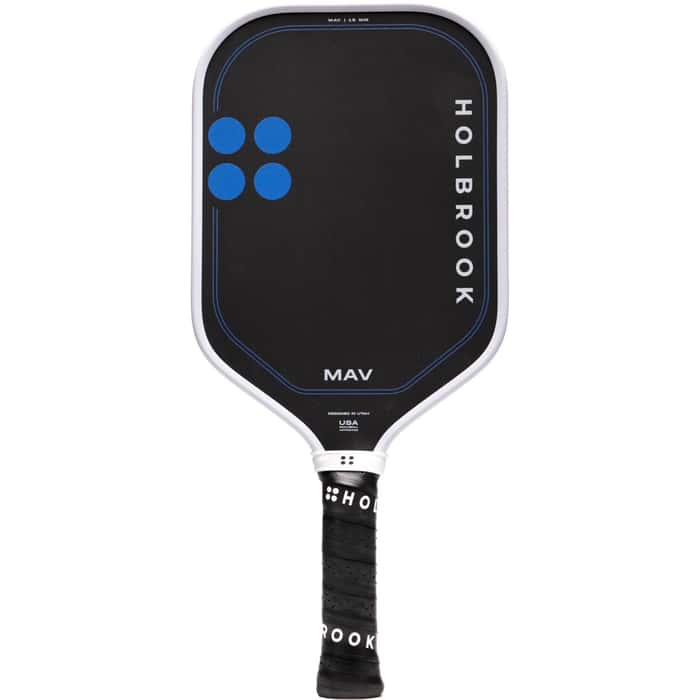
Holbrook Mav Pro 16 mm 2.0 Pickleball Paddle
- Power: Power playing really brings the heat, as power paddles allow for more pop and spin potential, as well as more speed. That’s why rallies may be shorter with power playing, because there will be quick moves that will (ideally) throw your opponents off. Power paddles have a smaller sweet spot, so more precision is required.
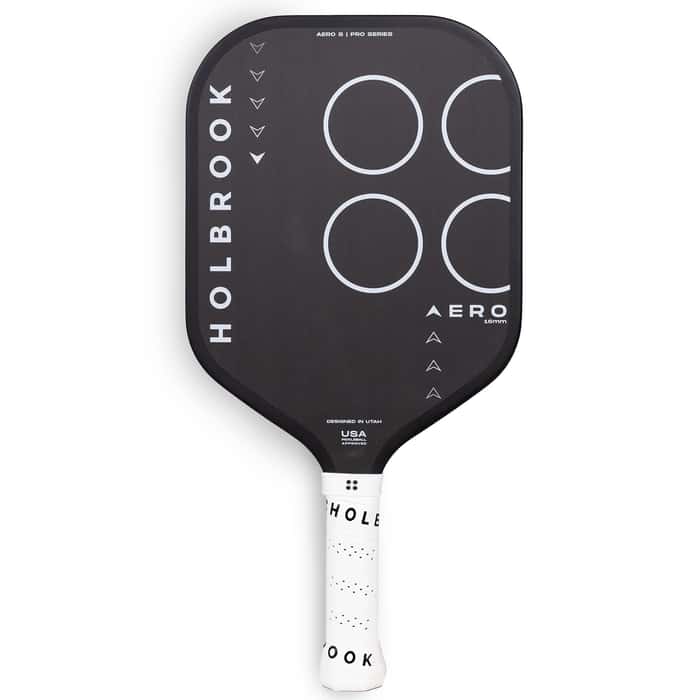
Paddle Thickness
In general, thicker paddles lend to more control, and thinner paddles are better for power. What’s considered a thicker paddle is typically 16 millimeters and up, while a thin paddle is around 14 millimeters or under.
- Thick: Thick paddles have a larger sweet spot, and therefore deliver more control. You’ll have more forgiveness with a thick paddle, which means they’re overall better suited for beginners.
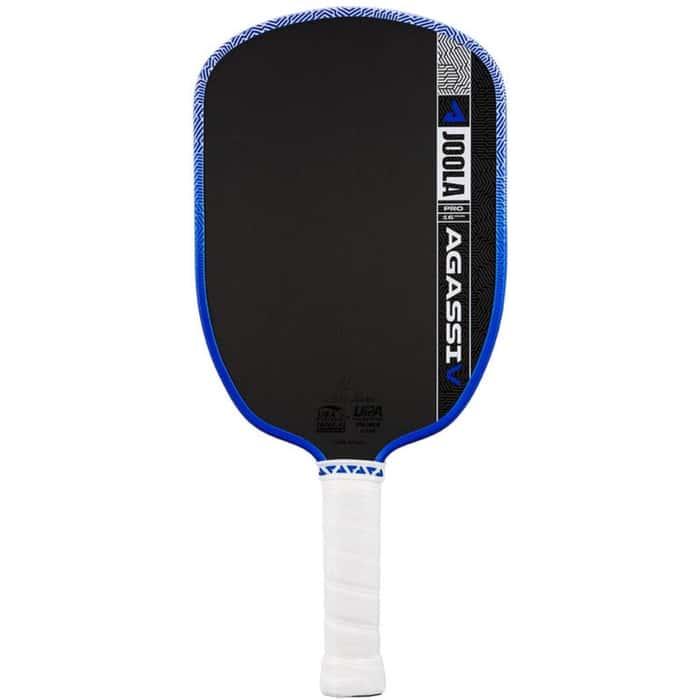
JOOLA Pro V – Agassi 16mm Pickleball Paddle
- Thin: Thin paddles have a smaller sweet spot, but more pop and spin potential, which is why they’re considered power paddles. Since you have to be more precise with how you hit the ball, thin paddles are best for those who already have some pickleball (or tennis) experience under their belt.
Paddle Shape
While pickleball paddles cannot exceed 17 inches in length, nor 24 inches in combined length and width, there are variations in shape that still fall within those regulations. Here’s a comparison of standard/wide paddles, elongated paddles, and hybrid paddles:
- Standard/wide: These are your control paddles, and they’re great for beginners. Due to their larger sweet spot, they’re quite forgiving, so new players won’t have to stress as much about precision when aiming for the ball. They’re also pretty easy to maneuver.
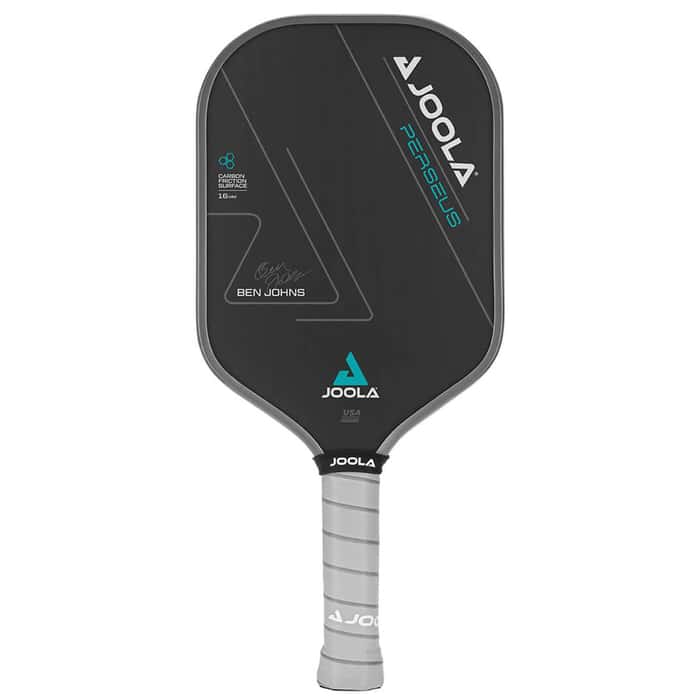
JOOLA Ben Johns Perseus CFS 16 Pickleball Paddle
- Elongated: With more reach and spin, an elongated paddle is the better choice for a power player, or simply someone more comfortable with paddle sports like tennis. As you may have assumed by now, an elongated paddle has a smaller sweet spot, but more potential for powerful hits.
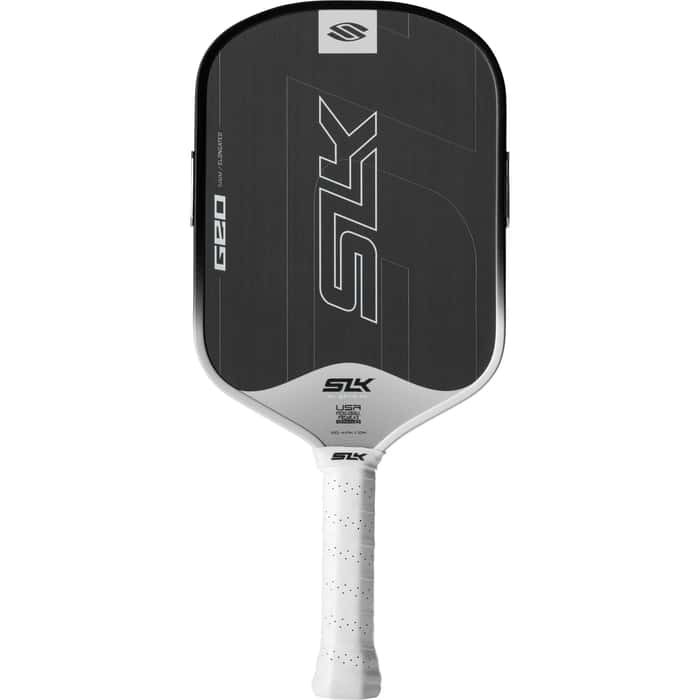
Selkirk SLK Geo Elongated Pickleball Paddle
- Hybrid: These fall somewhere between standard/wide and elongated. A hybrid paddle will be longer than your standard paddle, but have a wider face than a typical elongated paddle. This means you’ll get a larger sweet spot, increased reach and power, but also a solid baseline of control.
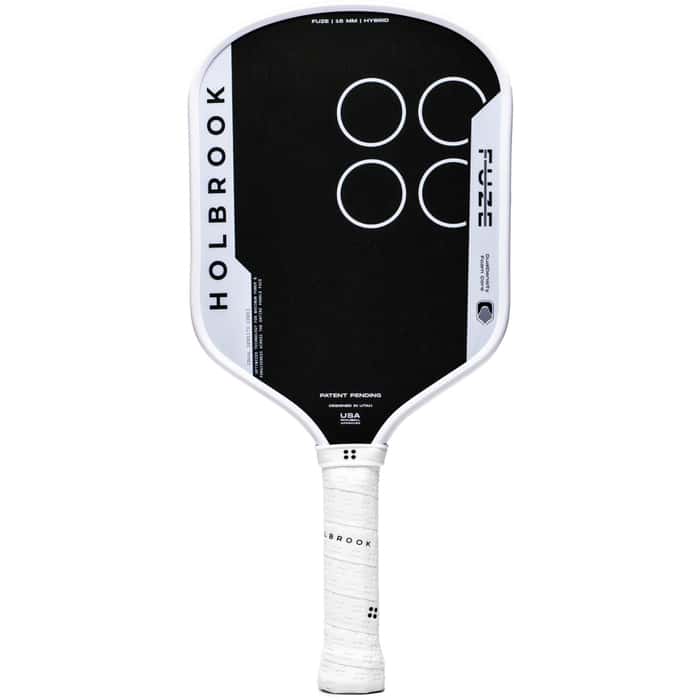
Holbrook Fuze Hybrid 16 mm Pickleball Paddle
Pro tip: While it may be tempting to immediately go for a hybrid paddle as a beginner, a standard/wide paddle is still your best bet if you’re just starting out. Though a hybrid paddle doesn’t dip all the way into the advanced pool, it still takes a little prior experience to maneuver correctly.
Handle Length
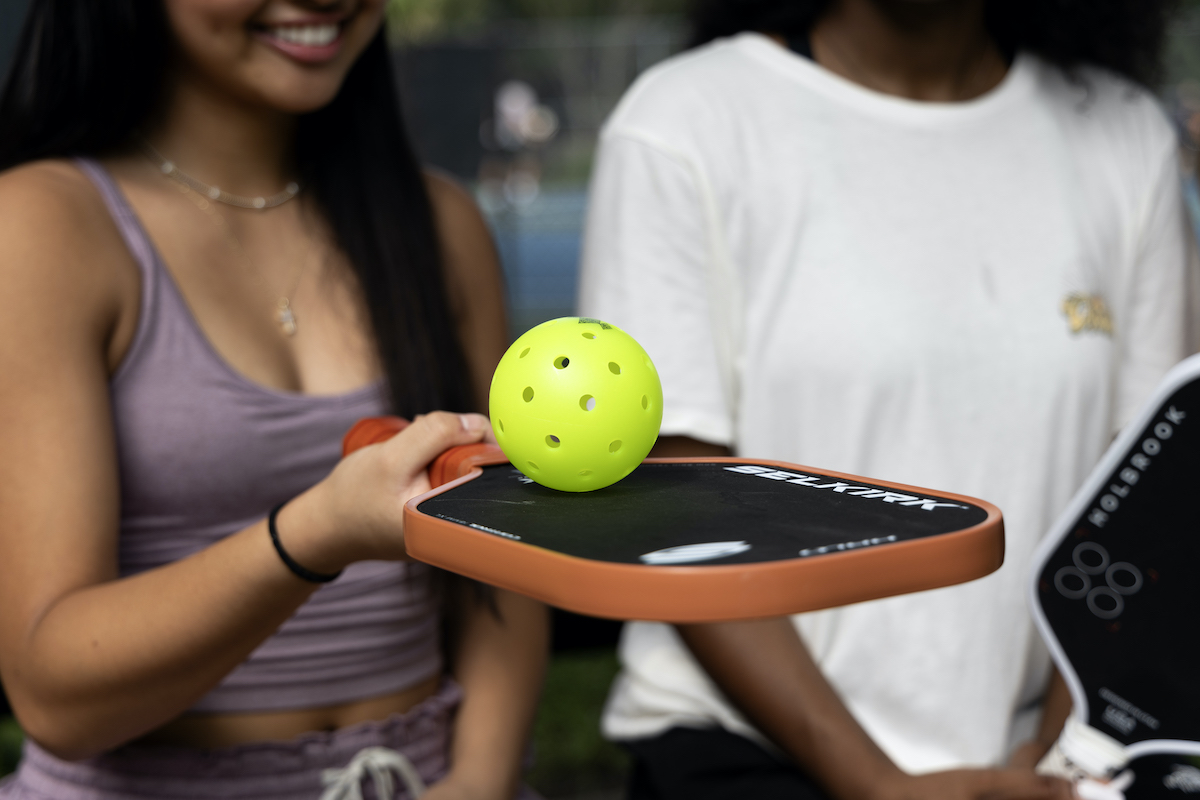
The handle length of your pickleball paddle plays a role in your performance, especially if you have a specific playing style or certain objectives in mind. Standard handle length is typically in the 5-inch to 5.5-inch range, but you can opt for longer or shorter.
- Standard handle length: At 5-5.5 inches, you can’t go wrong with a standard paddle length. You won’t have to deal with hand crowding (you can usually fit two hands on the handle if needed), and it’s overall the most versatile choice.
- Longer handle length: These handles are longer than 5.5 inches, which means they allow for two-handed grips. Longer handles also provide more leverage and power, but have less room for error.
- Shorter handle length: Clocking in at under 5 inches, shorter handles aren’t as popular. Though you will get more paddle surface, which reduces error, most people won’t be able to do a two-handed backhand.
Pro tip: While handle circumference is also a thing, we don’t think you should worry about it too much. If your handle is too narrow, you can simply add an overgrip to increase its size. Therefore, it’s better to start with a smaller circumference and add an overgrip, than choose a paddle with a large circumference that you can’t reduce.
Paddle Weight
The right pickleball paddle weight for you comes down to more than just personal preference and comfort, but also what you’re hoping to achieve in terms of maneuverability, power, and stability. Most paddles fall within the 7.5 ounce to 8.3 ounce range, which is referred to as midweight.
- Lightweight: These are 7.4 ounces or lighter. As you’d expect, they’re very easy to swing and will cause less arm fatigue. But with that comes the trade-off of less power and stability. If you’re small-framed, a lightweight paddle could be perfectly proportionate to you.
- Midweight: This is going to be the most beginner-friendly pickleball paddle weight, as it balances control with power. But even if you aren’t a beginner, a midweight paddle is still a great option, as it offers versatility and is good for most playing styles.
- Heavyweight: Clocking in at 8.4 ounces or heavier, these paddles are all about delivering power. While that may automatically sound appealing to some, remember that with more power, you’ll have less agility. Also, arm fatigue is real. For this reason, usually only more advanced players use heavyweight paddles.
Paddle Face Material
Paddle Face Material
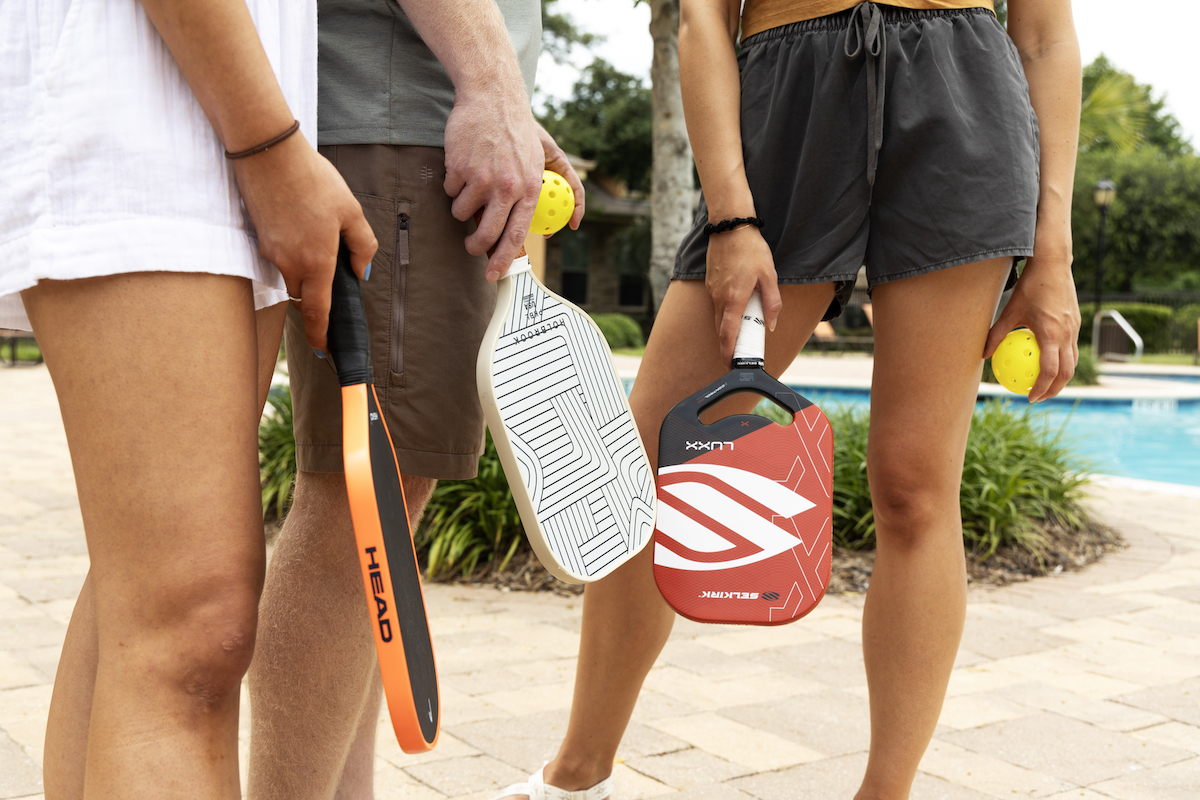
The most common pickleball paddle face materials are carbon fiber, fiberglass, and graphite. Each has its own pros and cons, and each material will affect how you interact with the ball. Note that wood paddles are also available and are typically the most budget-friendly option, making them a reasonable starting point for casual beginners, though most players upgrade to carbon fiber, fiberglass, or graphite as their game develops.
- Carbon fiber: This paddle face material is quite stiff with even energy distribution, which allows for more control and spin potential. That being said, you’ll have to exert more energy to get a powerful hit.
- Fiberglass: Since fiberglass paddles are less stiff and deliver more rebound, you can achieve power more easily. As you may have picked up by now, with this being a power-driven paddle, the sweet spot is smaller.
- Graphite: Though very lightweight, graphite is still very stiff. These are very responsive paddles, best for technical shots. Due to material sourcing and the manufacturing process, graphite paddles are less popular and more expensive.
So, Which Pickleball Paddle is Right for You?
As you can see, there are many specifications and features to consider when figuring out how to choose a pickleball paddle, but don’t let all of it overwhelm you. If you’re an experienced pickleball player and know your playing style, then you’re already well on your way to knowing which kind of paddle suits your needs. If you’re new to pickleball and still figuring out your style, we recommend starting with a paddle that’s versatile and beginner-friendly, such as a more control play-oriented paddle that’s midweight with a decent thickness and a standard/wide shape. And if you need any help with choosing other pickleball gear, check out our pickleball equipment buying guide. See you on the courts!
Outdoor Expert Staff Pick
“I am an intermediate player (3.0) and I just moved up from my first paddle to this paddle. It is literally GAME CHANGING. More power, more reach. My serve is deeper and my returns are more aggressive. I am a smaller person (5’4”) and am getting to balls that I consistently missed before. And the sound it makes on contact (the BOOM) is SO SATISFYING.” – Sicily D.
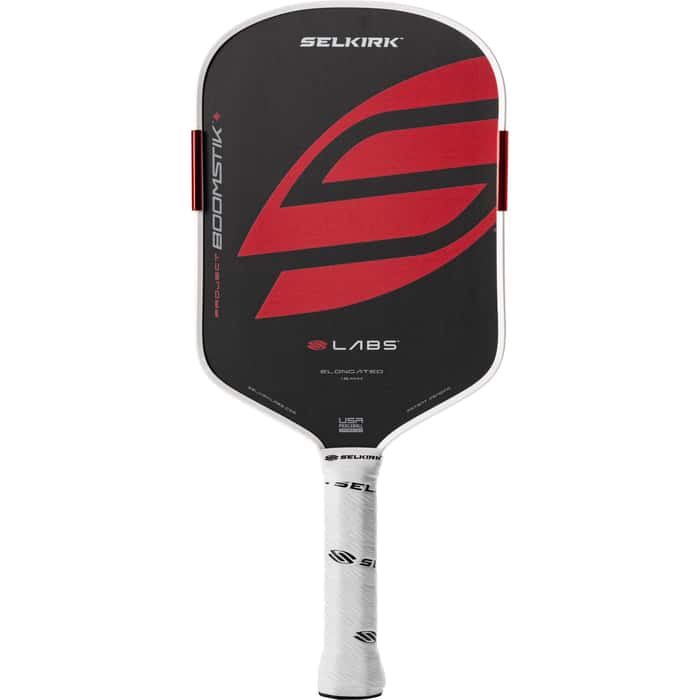
Selkirk Labs Project Boomstik Elongated Pickleball Paddle

About the Author, Sydney Fogel
Hi, I’m Sydney! I’m a writer and editor living in San Francisco. After attending college and kicking off my career in Boston, I made my way back to the Bay Area, where I grew up. When I’m not working, you can find me enjoying everything my beautiful area has to offer, from spending time at the beach (I live just a few blocks away!) to climbing those San Francisco hills to check out the latest restaurant. I’m also super into working out and have been dancing my entire life. Feel free to reach out at sfogel11@gmail.com