
You may already be familiar with road running shoes and trail running shoes, but what about gravel running shoes? Though essentially a hybrid of road and trail running shoes, gravel running shoes have carved out a category all their own. They’re constructed to support running on certain terrain, such as crushed gravel paths and fire roads, while still being able to perform well on pavement. The category is following the same path gravel bikes took a few years ago. Gravel running is about mixing pavement, dirt paths, and gravel roads in a single run, and runners want one shoe that can handle all of it.
Below we’ll delve into what makes a gravel running shoe so distinct and answer some frequently asked questions that’ll shed light on whether they're right for you. We’ll also discuss some of our favorite gravel running shoes from Salomon, all of which you can shop at Sun & Ski Sports.
Table of Contents
What Are Gravel Running Shoes?
Who Are Gravel Running Shoes For?
What Can You Expect From Gravel Running Shoes?
Why Can’t You Just Wear Road Running Shoes on Gravel?
Can Gravel Running Shoes Replace Hiking Shoes or Trail Running Shoes?
Gravel Running Shoes at Sun & Ski Sports
Let’s Get Running
What Are Gravel Running Shoes?
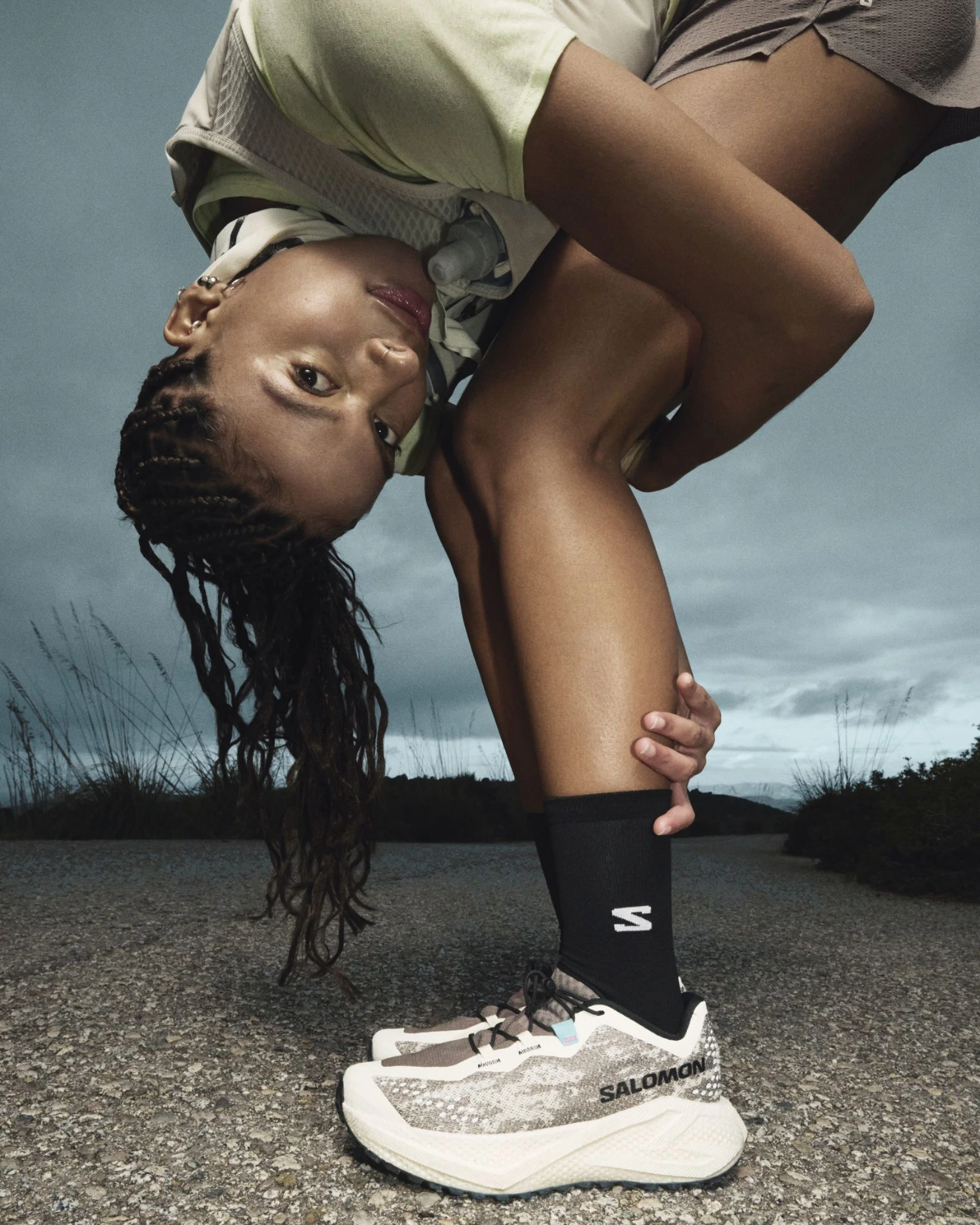
Not quite a road running shoe, but not a trail running shoe either, gravel running shoes land somewhere in the middle. You can think of them as a crossover between the two, combining features from both, so that you can take on gravel trails, fire roads, packed dirt trails, and pavement all with one style of shoe.
Gravel running shoes are constructed with more tread and deeper lugs than a standard road running shoe, but not so much that they’re heavy on pavement. They also have a stable, cushioned base for both comfort and rebound on and off the trails, as well a protective upper to keep gravel and dirt out.
Who Are Gravel Running Shoes For?
Gravel running shoes are perfect for those who anticipate running on both pavement and some off-road paths. For example, if you want a shoe that you can wear as you run on the sidewalk to then transition onto your local fire road, without having to change shoes, then this style is definitely good for you. That being said, gravel running shoes are not made for super technical terrain, so if you know you’re going to primarily be on rugged trails with lots of rocks or sand, you should probably stick to a trail running shoe.
So what are gravel running shoes for, exactly? They're best on these types of terrain:
Crushed gravel trails
Packed dirt trails
Fire and service roads
Park paths
Pavement
What Can You Expect From Gravel Running Shoes?
A gravel running shoe is made with some distinct features that strike a balance between a purely road running shoe and a trail running shoe. You’ll get stability and cushioning, moderate tread with medium-depth lugs, a protective upper, and more.
Here are some of the standout features:
Outsoles with moderate traction: The lugs of a gravel running shoe are usually around 2 to 4 mm. For comparison, a road running shoe’s lugs are around 0 to 2 mm, and a trial running shoe’s lugs are typically in the 4 to 6 mm range, or even deeper for very soft, muddy terrain. The lugs of a gravel running shoe let you have enough traction to take on small rocks and loose dirt, but not so much that it compromises a smooth ride on pavement.
Responsive cushioning: You’ll get plenty of cushioning with gravel running shoes for comfort and protection, but they still deliver on rebound, so they don’t feel heavy or clunky (especially on pavement).
A stable, secure fit: Gravel running shoes typically have a wider base for more stability, allowing you to run on moderately uneven terrain without losing your balance or feeling unstable.
A protective upper: To keep gravel and dirt out, gravel running shoes are constructed with more protection than a road running shoe. You can usually expect a breathable, mesh material, sometimes with the addition of a GORE-TEX membrane for additional weatherproofing.

Why Can’t You Just Wear Road Running Shoes on Gravel?
Road running shoes are made with very shallow lugs, if any lugs at all. This is to provide maximum surface contact with the pavement. While road running shoes may be able to handle smoother, off-road paths, deeper lugs really do provide stability on loose rocks and gravel and other uneven conditions. That’s why a gravel running shoe is a happy medium between a road running shoe and trail running shoe, giving you enough grip for the trails, but not so much that you feel like you’re barely making contact with the pavement (which is what happens with the deep lugs of trail running shoes).
Can Gravel Running Shoes Replace Hiking Shoes or Trail Running Shoes?
Not quite. Similar to how road running shoes can work on certain trails, gravel running shoes are appropriate for some off-road terrain, but they’re not made for super technical trails the way hiking shoes or trail running shoes are.
If you’re going on an easy hike on a relatively smooth trail, gravel running shoes can be worn in place of hiking shoes, but anything beyond that, it’s best to stick with hiking shoes or boots.
The same can be said for gravel running shoes replacing trail running shoes, though we’d argue this is even less suited, since running is more demanding than walking. If your intended run for the day is on a gravel running shoe-appropriate trail, meaning it’s on a crushed gravel path or fire road, then go for it. But if you’re going to be traversing larger rocks, mud, or sand, a gravel running shoe just isn’t going to cut it. Plus, by wearing a shoe that can’t fully handle the technical terrain a trail running shoe can, you run the risk of getting injured.
Gravel Running Shoes at Sun & Ski Sports
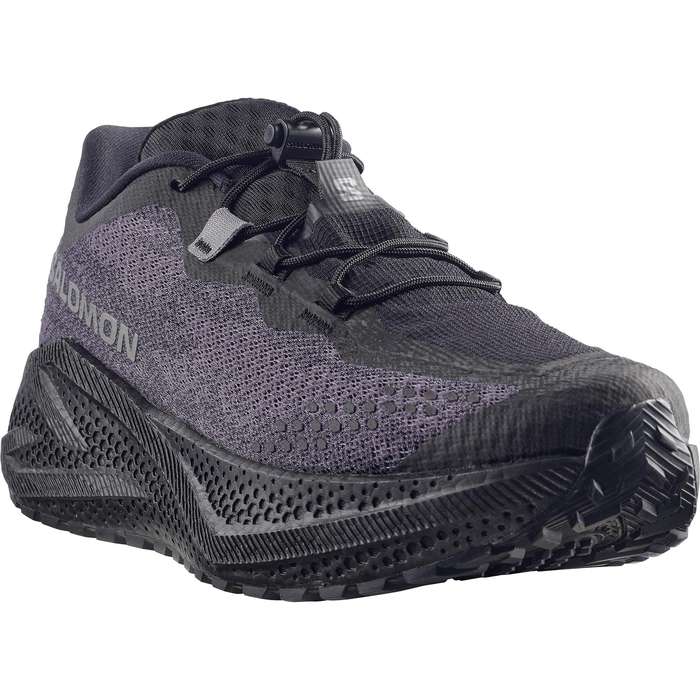
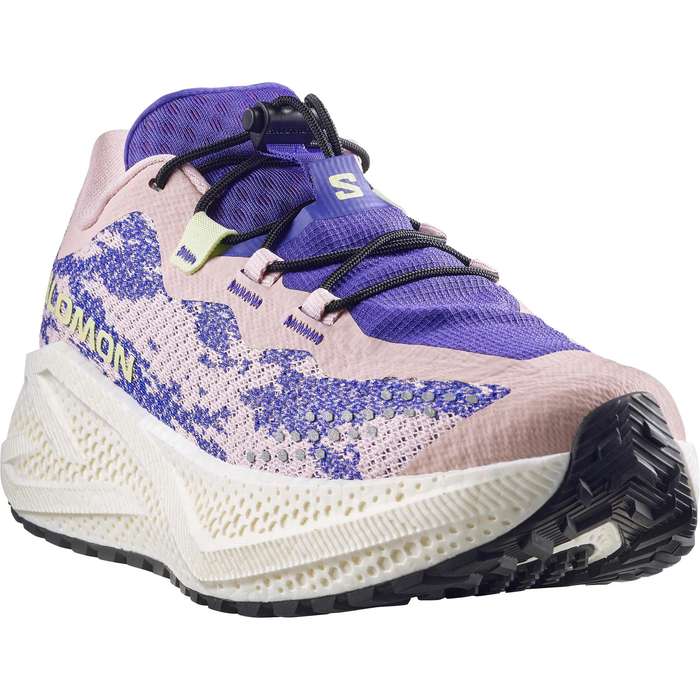
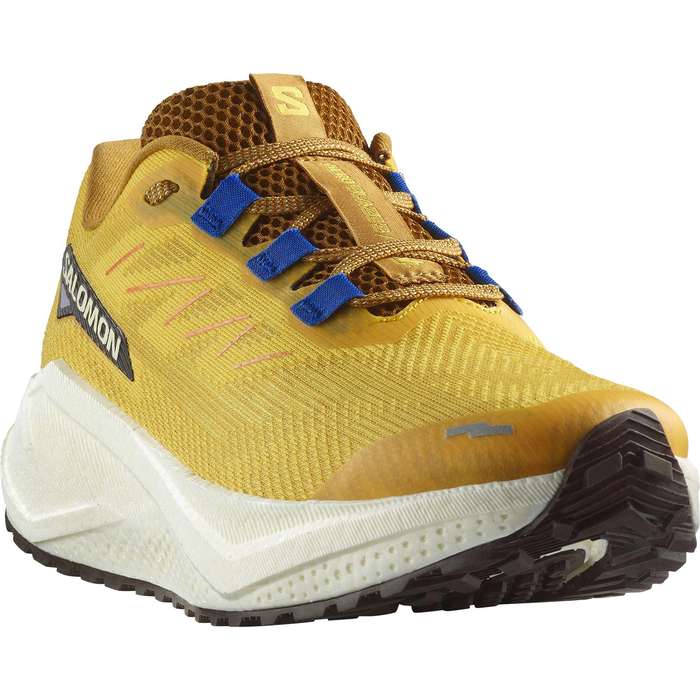
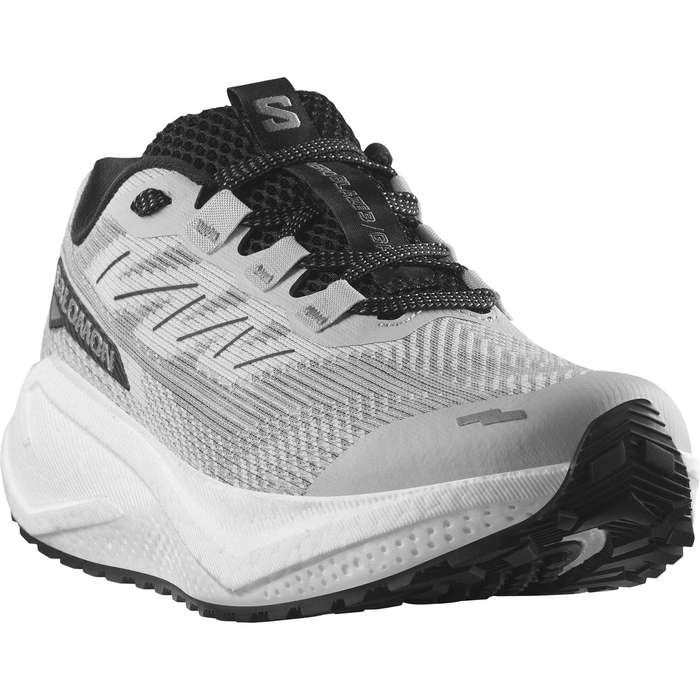
We love Salomon’s gravel running shoes, whether it’s the Aero Glide 4 GRVL or the Aero Blaze 3 GRVL. Both are excellent options with many similarities, but also a few differences.
Let’s take a look at the similarities first:
Chevron lugs: Both shoes have 2.5 mm chevron lugs, hitting that sweet spot between a road running shoe and trail running shoe, delivering adequate traction for certain trails, but still enough contact for pavement running.
optiFOAM² midsole: This is what gives soft, forgiving landings and springy, energetic push-offs both on pavement and gravel trails.
Molded OrthoLite® sockliner: The molded sockliner gives both shoes a secure, sock-like fit and more shock absorption.
Mesh uppers: Both shoes will be breathable, cool, and comfortable, thanks to the mesh upper.
And here’s where the differences come into play:
The Aero Blaze 3 GRVL is about an ounce lighter than the Aero Glide 4 GRVL, making it a touch more lively and more appropriate for faster-paced runs.
The Aero Glide 4 GRVL is more cushioned than the Aero Blaze 3 GRVL, so it provides more comfort. Therefore, it’s better for longer runs, potentially at a slightly slower pace.
The laces are different on the two shoes. Whereas the Aero Blaze 3 GRVL has regular laces, the Aero Glide 4 GRVL uses a quickLACE™ system that resembles a drawstring bungee cord for easy, even adjustments and a more personalized fit.
Let’s Get Running
Now that you know the ins and outs of gravel running shoes, is it the right shoe for you? If you plan to run on both the pavement and some non-technical trails and paths, then we’d respond with a resounding yes. You really can’t go wrong with this style of running shoe, as it’s very versatile and has you ready to take on these types of terrain. Unless you know for a fact that you’ll never step foot off the pavement, or that you want to only run on technical trails, having a pair on hand is a pretty logical decision for anyone curious about gravel running.. Stop by one of our Sun & Ski Sports locations and have an Outdoor Expert get you fitted and ready for your run.

About the Author, Sydney Fogel
Hi, I’m Sydney! I’m a writer and editor living in San Francisco. After attending college and kicking off my career in Boston, I made my way back to the Bay Area, where I grew up. When I’m not working, you can find me enjoying everything my beautiful area has to offer, from spending time at the beach (I live just a few blocks away!) to climbing those San Francisco hills to check out the latest restaurant. I’m also super into working out and have been dancing my entire life. Feel free to reach out at Sfogel@sunandski.com