A bike that fits you perfectly is a bike that you’ll love to ride. Not only does a properly fitting bike allow for a great riding experience, but it also allows for more riding confidence, and can even help you improve your handling on the trails—so you can rip through those technical lines and climb more efficiently! This guide will help you understand bike geometry specifications, so you can buy a bike online with confidence. Customer experience is as important to us in-store as it is online, so let’s roll!
First, here are some tips to keep in mind when you’re browsing our online bike shop:
- Have you established a riding style/preference? Your bike should fit how you ride. Are you looking for trail riding, cross country, enduro, or downhill? If you haven’t yet decided what type of mountain biking you’d like to do, check out our mountain bike selection today!
- The most important feature for your new bike is the frame size as it’s key for riding comfortably.
- You can fine tune your bike fitment with different bike components to really make your bike all about you!
The Key To Biking Comfortably: How to Determine Your Frame Size
Most mountain bikes come in standard frame sizes: S – M – L. However, bike manufacturers are always evolving, so you may even find XS and XL frames now! Your frame size will typically depend on your height. Luckily, our website features various size charts from different bike manufacturers, so you can shop for bikes online just as you would for clothing & footwear. Simply check out the “Product Details” section when browsing the bike you’re interested in! However, it’s important to remain detail-oriented when browsing our sizing guides. Unlike clothing & footwear; there are some trade-offs to sizing down or up if you’re in-between sizes.
How to Tell if You Need a Smaller Frame Size
A smaller frame size will have a shorter reach, wheelbase, seat tube length, and stand over height. Each of these features are the main indicators to consider—especially depending on your riding style. Sizing down will allow you to be more nimble, fast, and efficient—because you’ll be able to control the bike with less. However, a lower and longer bike will put you in a more aggressive riding position, which leads to more energy use and can become tiring (unless you’re the energizer bunny)! So, think about if your rides are long and tend to go up and down a variety of trails, or if they’re quick, and tend to be a straight shot down the mountain. Sizing down will likely more comfortable for all-day riding. Plus, if you have longer legs, a shorter torso, and you’re not extremely flexible, then a smaller size can help you maintain control, so you can be more flowy through the trails.
How to Tell if You Need a Bigger Frame Size
Bigger is better! … Sometimes. While a larger frame does allow for an increase in reach and a slightly longer wheelbase, it’s also a more aggressive riding position for climbing uphill. You may love the stability you’ll experience during those gnarly downhill descents, but you may loathe climbing up the mountain even more. We recommend a bigger frame size if you have a longer torso, are more flexible, and don’t mind pedaling up a mountain or plowing through terrain.
Measuring Your Bike Geometry to Ensure Proper Fit
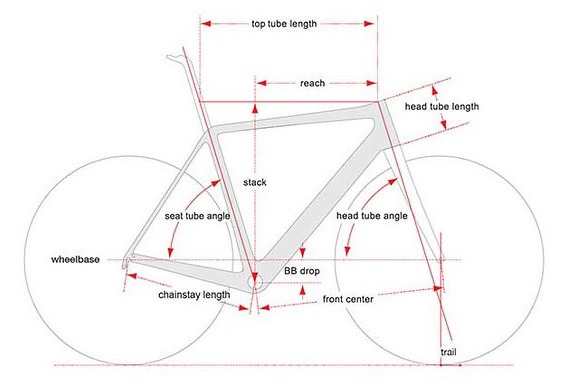
No need for protractors or TI-83/84’s on this lesson—your body and a tape measure will do the trick! As you learn about yourself and establish your riding style and terrain preference, the geometry of your bike will grow to become extremely important. In fact, a bike’s geometrical measurements can even help you determine which bike to buy! Here are the geometrical features you need to consider for your next bike, so it fits you properly.
Figure Out how the Bike Will Feel When You’re Out of the Saddle with the Reach Measurement
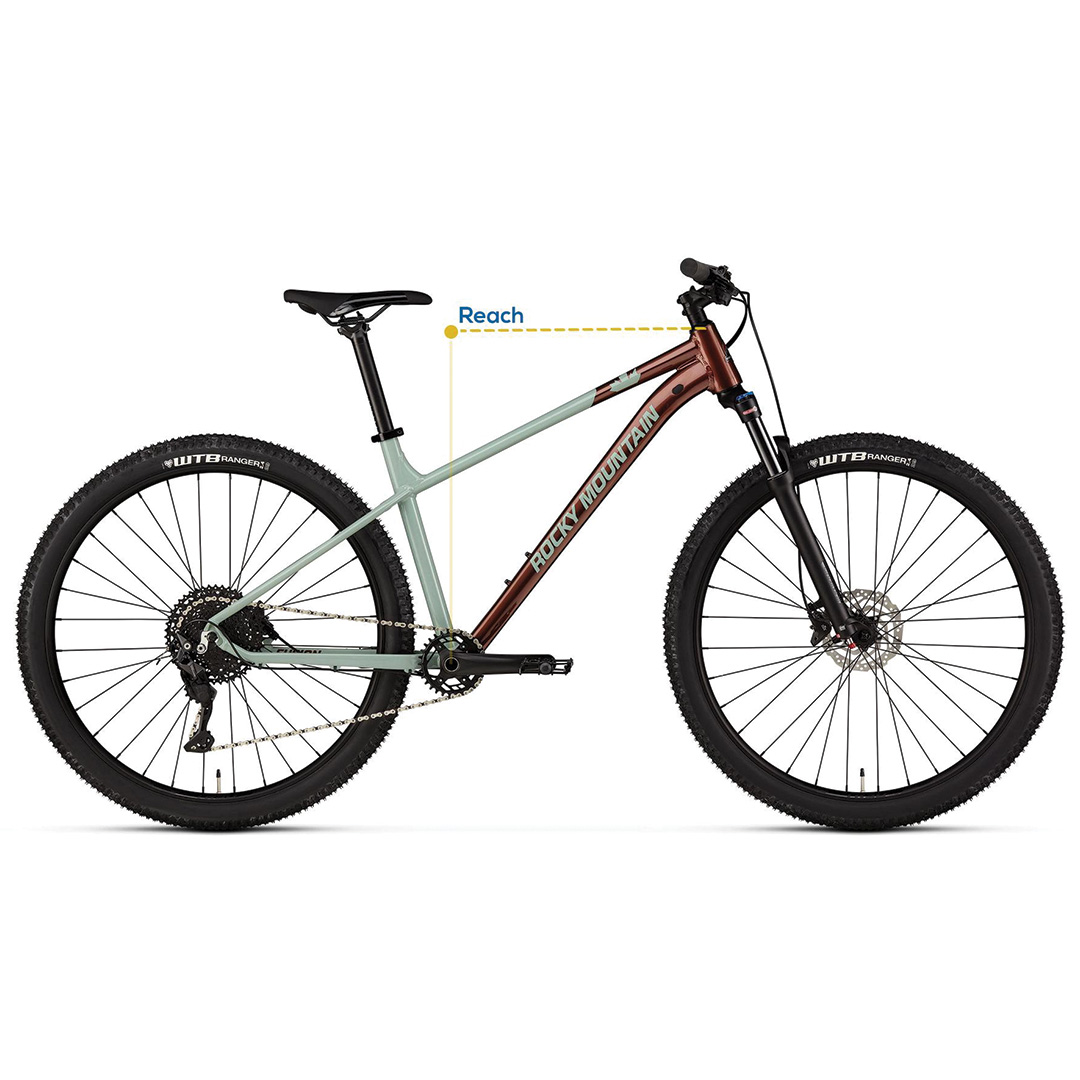
Whether you’re standing up to pedal or you’re down low and descending down a trail, the reach measurement is essential to recognize how you’ll feel when you’re out of the saddle. As one of the most important measurements for your bike, the reach measurement can actually make or break your riding experience—especially if you enjoy switching from sitting to standing. Reach can be measured horizontally—from the center of the bottom bracket to the center of the head tube.
The Stack Measurement Can Make Your Pedaling More Efficient
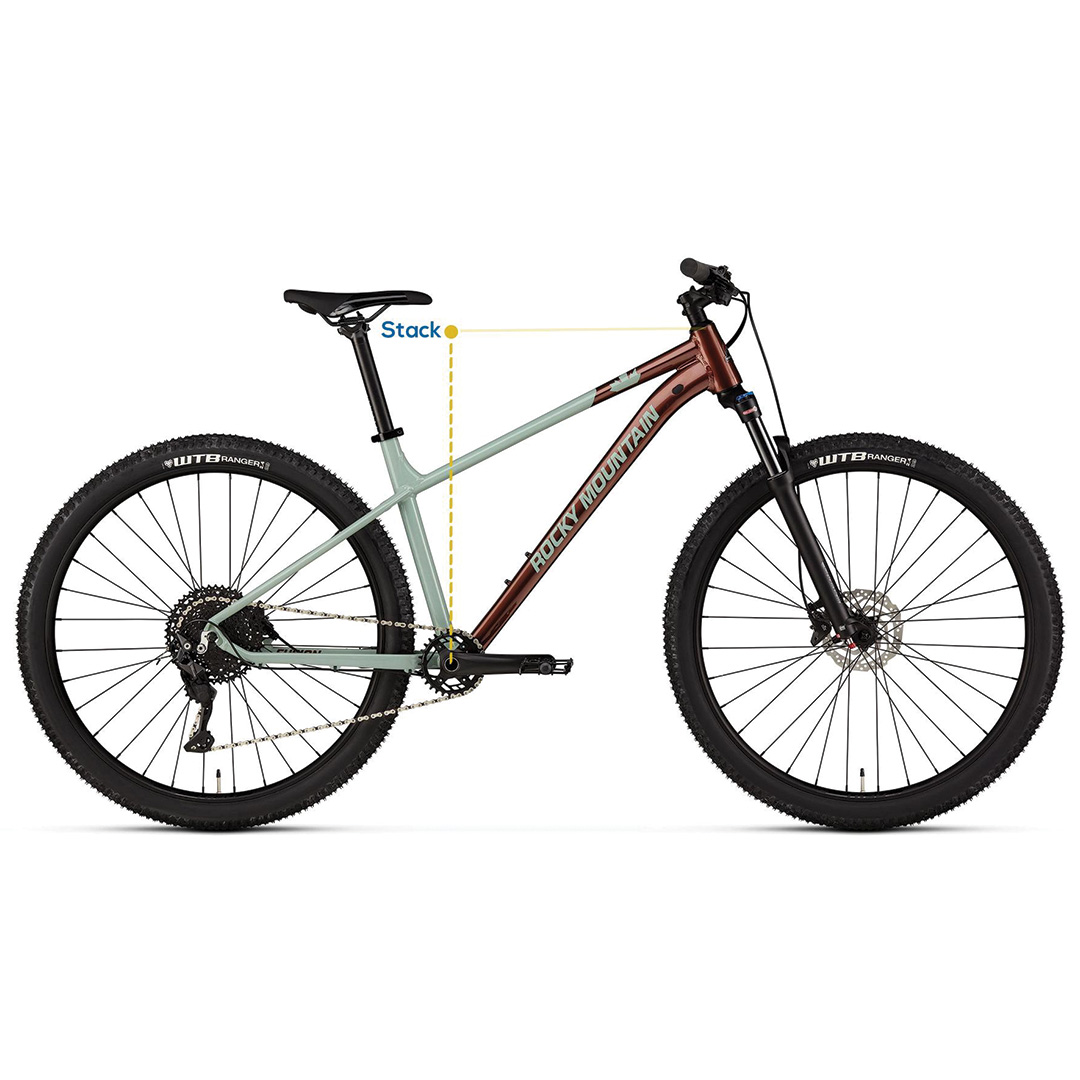
Much like the reach measurement, the stack is an imaginary vertical measurement which starts at the center of the bottom bracket, and ends at the central point at the top of the head tube. It determines how tall the frame is and is another contact point, thus allowing the rider to be more efficient in relation to riding position and pedaling. Higher/more stack will bring the rider’s position more upright and shorter/less will be in a more tucked and aggressive position.
The Head Tube Angle Affects Your Handling of the Bike
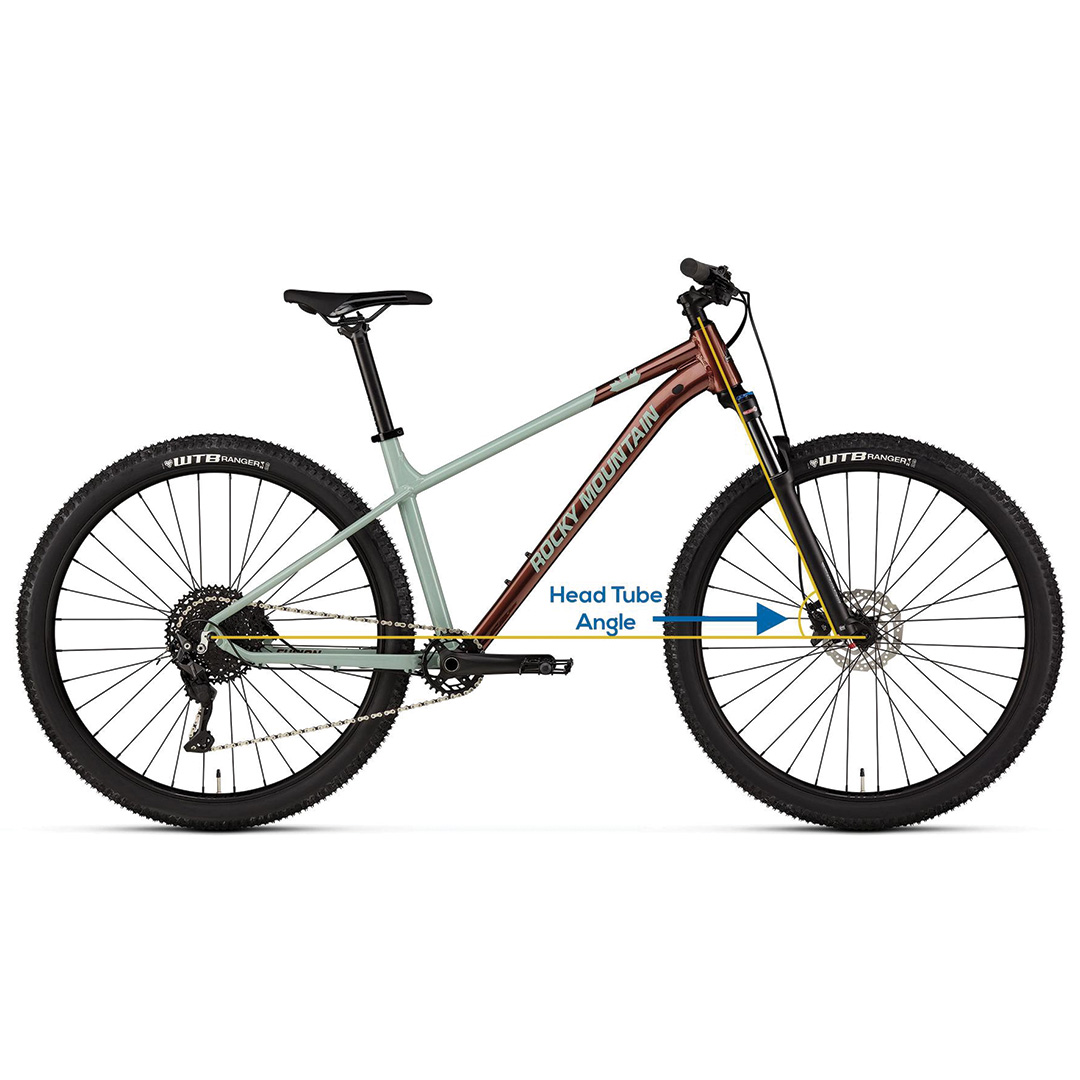
The head tube angle (also known as the Slack angle) is determined by the angle of the head tube in relation to the ground. This angle typically stays between 63 and 66 degrees, and it determines how far the bike’s fork will stick out. The steeper the angle, the better the handling—however, you won’t go as fast, and vice versa. If you’re a mountain bike rider who plans to climb a lot, or plans to ride downhill technical trails—this angle needs to factor into your decision. Luckily, there are bike manufacturers with have models that can do both very well. For a ride that’s extremely efficient in climbing, great for technical and/or flowy trails, check out our Cannondale bikes.
Determining the Length That’s Best for You with a Top Tube Measurement
The top tube measurement can make your bike feel longer or even shorter while you’re seated. This can affect your overall comfort as you’re hitting the trails—nobody wants to feel like they’re reaching for the handles, and similarly, nobody wants to feel crunched up on their bike. An “effective top tube” is a horizontal line, but it’s not a requirement in order to work efficiently. Oftentimes, we like to create an imaginary horizontal line to tell us exactly how comfortably the ride will fit you. We measure the top tube by starting from the center of the top of the head tube, and ending at the center of the seat post at the same height.
Pay Attention to Standover Height in Case of an Emergency
The standover height needs to be ideal for emergency situations when you need to quickly dismount. Otherwise, if you cannot stand over the top tube without touching it, you run the risk of hurting yourself if you stop quickly. To find the perfect standover height, start by measuring your inseam, and standing in a comfortable staddle position with your cycling shoes on. Be sure to allow for at least 2” minimum for clearance between you and the top tube. If there’s at least a 2’’ clearance, you’re good to go!
Overall, the more you ride, the more these measurements will affect your decision when buying a new bike. You’ll begin to recognize what aspects you need in a bike, and from there, you can find one that fits properly.
The Importance of Fine Tuning: Enjoy Your Adventure to the Fullest
Dial in your whip by changing your riding position or swapping out bike components! Here are the benefits of fine tuning, and how they can help make you more comfortable on your next adventure.
Stem: raising/lowering height and lengthening/shortening your stem alters the position and helps keep you comfortable in downhill descents.
Handlebars: adjust your handlebars to be wider/narrower for more control and to be more agile. Plus, if you have broader/narrower shoulders, make sure to adjust as necessary, so you can have more/less room in the cockpit. You can also change the sweep to either roll it forward or move the handlebar closer to you.
Saddle: positioning your saddle can create more or less weight on the rear of your bike, depending on what kind of riding you do. Moving the saddle more forward can be beneficial for climbing.
Designed and Manufactured to Include Women’s Sizing: Women’s Mountain Bikes
While there are some bike manufacturers producing XS frames to accommodate smaller riders, there’s also women-specific bike manufacturers! One women-specific bike manufacturer is a brand called Juliana. If you’re familiar with Santa Cruz Bicycles, this is their sister company which is supported by Brazilian born World Cup Downhill and US National Cross-Country Champion; Juliana Furtado. This brand has worked tirelessly to build quality bikes with a woman’s body in mind. Featuring narrower shoulders, shorter reach, small diameter handlebars and grips, better sized saddles, brake levers and shorter crank lengths—these bikes are revolutionary for women across the globe.
A bike that fits you perfectly will allow you to have great adventures. With the ability to be comfortable all-day long, you’ll never want to stop the fun! Still not sure about the right mountain bike for you? Chat with one of our experts online!
Chat with an Outdoor Expert! Shop All Mountain Bikes.